.webp)

Translating for the Gaming Industry: Challenges and Trends

Summary
Gaming translation plays a major role in how players experience a game across different regions. It’s not just about translating dialogue or menus, but adapting humor, tone, visuals, and cultural references so the game feels natural to each audience. As games become more story-driven and immersive, even small translation mistakes can break immersion or confuse players. Tight production timelines add pressure, making accuracy and consistency harder to maintain. While AI and machine translation tools help speed up the process, they still struggle with context, slang, and emotional nuance. That’s why human translators remain essential, especially for narrative-heavy titles. Current trends show a stronger focus on inclusivity, accessibility, and real-time translation for live gameplay and updates. When done properly, gaming translation helps studios reach global players without losing the heart of the original game.
In the ever-evolving landscape of the gaming industry, where global markets are more accessible than ever, the role of translation has become increasingly vital. From facilitating player engagement to ensuring regulatory compliance, translation in the gaming industry presents unique challenges and follows distinct trends.
The Rise of Localization
Localization goes beyond translation, adapting content to specific cultural and linguistic nuances. In gaming, this means not only translating dialogue and text but also ensuring that graphics, symbols, and even gameplay mechanics are culturally appropriate and relevant. As games become more immersive and narrative-driven, the demand for high-quality localization continues to grow.
Challenges in Translation
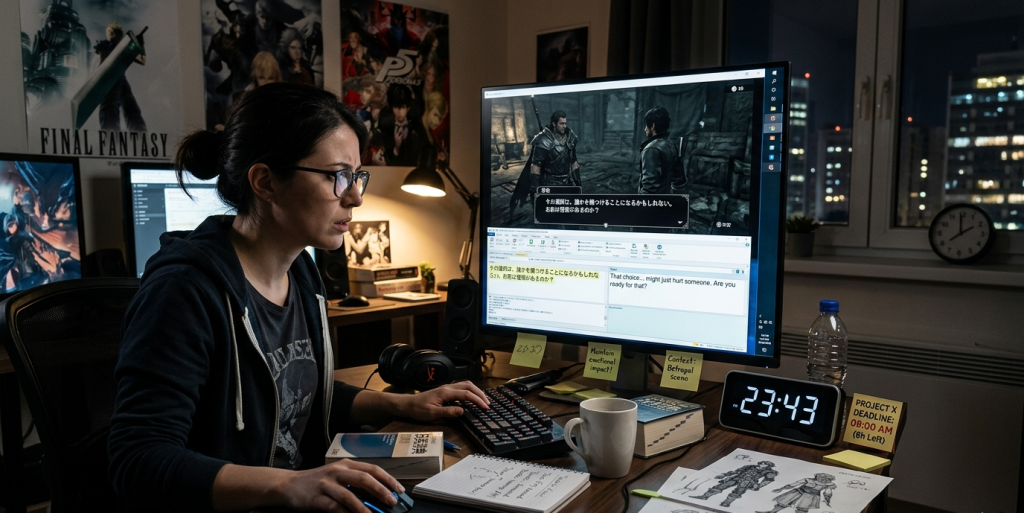
One of the biggest challenges in gaming translation is maintaining the tone and intent of the original content. This is especially crucial in games with complex narratives or nuanced dialogue, where a mistranslation can significantly impact the player’s experience. Additionally, the rapid pace of game development often means tight deadlines, putting pressure on translators to deliver high-quality work quickly.
Technological Solutions
To address these challenges, the gaming industry has turned to technology. Machine translation and AI-driven tools can help speed up the translation process, but they are not without their limitations. While these tools can be useful for generating initial translations, human translators are still needed to ensure accuracy and cultural relevance.
At Connected Translation, we are proud to combine both technology and human translators. AI is only a support, and all our translations are 100% human reviewed, certified, and accurate.
Trends in Gaming Translation
One trend in gaming translation is the increasing focus on inclusivity. Game developers are recognizing the importance of making games accessible to players from diverse linguistic backgrounds, leading to more comprehensive localization efforts. Another trend is the rise of live translation services, where translators work in real-time to provide subtitles or voiceovers during gameplay.
Translation in the gaming industry is a complex and dynamic field, driven by the need to engage global audiences while maintaining the integrity of the original content. As technology continues to advance, translators and developers alike must adapt to new tools and trends to ensure that games are enjoyed by players around the world.

Daniel Brooks is a New York City-based writer and content strategist with a deep curiosity for how language shapes connection across cultures. With over ten years of experience crafting digital content for global audiences, Daniel brings a thoughtful and practical voice to the Connected Translations blog.