single_php

USCIS Certified Translator vs USCIS Approved Translators: What’s the Difference?
Summary
Navigating the immigration process can be challenging, especially when it comes to translating your documents for USCIS. But what’s the difference between a USCIS certified translator and a USCIS approved translator? This guide breaks down these roles, helping you understand the importance of using the right professional for your immigration needs.

When applying for immigration benefits or visas through USCIS (U.S. Citizenship and Immigration Services), one of the critical requirements is providing translated documents. These could include birth certificates, marriage licenses, medical records, or other legal documents that need to be accurately converted into English. But what exactly is a USCIS certified translator? And what does it mean to be a USCIS approved translator?

In this blog, we’ll delve into the key differences between these two types of translators and why it matters for your immigration process. Whether you’re submitting documents for a green card, family-based visa, or citizenship application, understanding these distinctions can save you time and ensure your application isn’t delayed or rejected due to translation errors.

Let’s begin by clarifying the roles of certified translators and approved translators within the immigration context.

1. What Is a USCIS Certified Translator?

A USCIS certified translator is a professional translator who is accredited to provide certified translations of official documents for submission to USCIS. Certification means that the translator is qualified and attests that the translated document is a true and accurate representation of the original document.

Key Characteristics of a USCIS Certified Translator:

  • Translation Accuracy: The translator must ensure that the translation is both linguistically accurate and faithful to the original document’s meaning. This is particularly important for legal and official documents, where even a small mistake can lead to significant issues.
  • Certification of the Translation: The translator provides a certification statement that guarantees the translation is complete and correct. This statement typically includes the translator’s qualifications and credentials, ensuring that the translation meets USCIS standards.
  • Expertise in Immigration Documents: USCIS certified translators are often familiar with the specific terminology used in immigration documents, making them ideal for translating vital records like birth certificates, marriage certificates, affidavits, and more.
  • Legal Requirement for Immigration Documents: USCIS requires that translations be completed by a certified translator to ensure that immigration forms and documents are understood accurately. This is especially critical for documents that will influence visa eligibility, immigration status, or citizenship decisions.

While USCIS certified translators are responsible for translating the document and certifying the accuracy, they are not necessarily listed as approved by USCIS (which we’ll discuss below). They simply meet the necessary legal qualifications for submitting translations to USCIS.

2. What is a USCIS Approved Translator?

Unlike certified translators, the term USCIS approved translator isn’t an official designation or requirement set by USCIS. Instead, USCIS approved translators generally refer to translators whose services are recognized by USCIS as being competent and in compliance with their translation guidelines.

Key Characteristics of a USCIS Approved Translator:

  • Competence in Immigration Translations: USCIS approved translators are typically experienced in translating legal and immigration-related documents. However, they do not provide a certification statement that guarantees the translation’s accuracy or completeness.
  • Lack of Formal Certification Requirements: Unlike certified translators, USCIS approved translators may not be required to undergo any formal certification process. As a result, their translations may not carry the same official status as those provided by certified translators.
  • Recognition by USCIS: The term “approved” in this context generally implies that the translator is familiar with USCIS requirements, but they are not necessarily required to follow strict certification processes. Their work may still be accepted by USCIS, but it’s best to check for compliance with the guidelines set by the immigration service.

The Distinction Between Certified and Approved Translators:

  • Certified Translators are explicitly recognized by USCIS for providing official translations with guaranteed accuracy. They are required to provide a certification statement to accompany the translated documents.
  • Approved Translators are competent professionals who may meet USCIS requirements but are not officially certified or bound by the same certification processes. Their translations may still be accepted, but it’s crucial to ensure they meet all of USCIS’s guidelines.

The key takeaway here is that while USCIS approved translators can offer useful services, USCIS certified translators provide an added layer of legal assurance, which is often necessary for the smooth processing of your immigration application.

3. The Importance of Certified Translations for USCIS

When it comes to USCIS approved translations, it’s important to understand why opting for a certified translator is usually the best choice. Having your documents translated by a certified USCIS translator ensures that your immigration paperwork will not encounter unnecessary roadblocks or delays.

Why Choose a USCIS Certified Translator?

  • Legal Assurance: As mentioned, USCIS certified translators provide a certification statement that attests to the accuracy of the translation. This certification ensures the translated documents are legally recognized, reducing the chances of rejection or delay due to issues with translation.
  • Professional Expertise: Certified translators are trained in legal terminology and understand the nuances of USCIS requirements, making them the ideal choice for translating documents that will be used for official immigration purposes.
  • Eliminates the Risk of Rejection: Submitting documents with non-certified translations can result in delays or denials of your application. USCIS is stringent about the quality and accuracy of the translations they accept, so opting for certified translations minimizes the risk of your immigration case being delayed.
  • Ensures Accurate Representation: When translating important documents like marriage certificates, birth certificates, or educational transcripts, it’s essential that all details are translated accurately. A USCIS certified translator guarantees that no important detail is lost in translation.

Choosing a certified USCIS translator is the most secure route to ensure your documents are processed efficiently and accurately. This is especially important for official records, which are integral to your immigration status or family reunification application.

4. How to Choose the Right USCIS Certified Translator
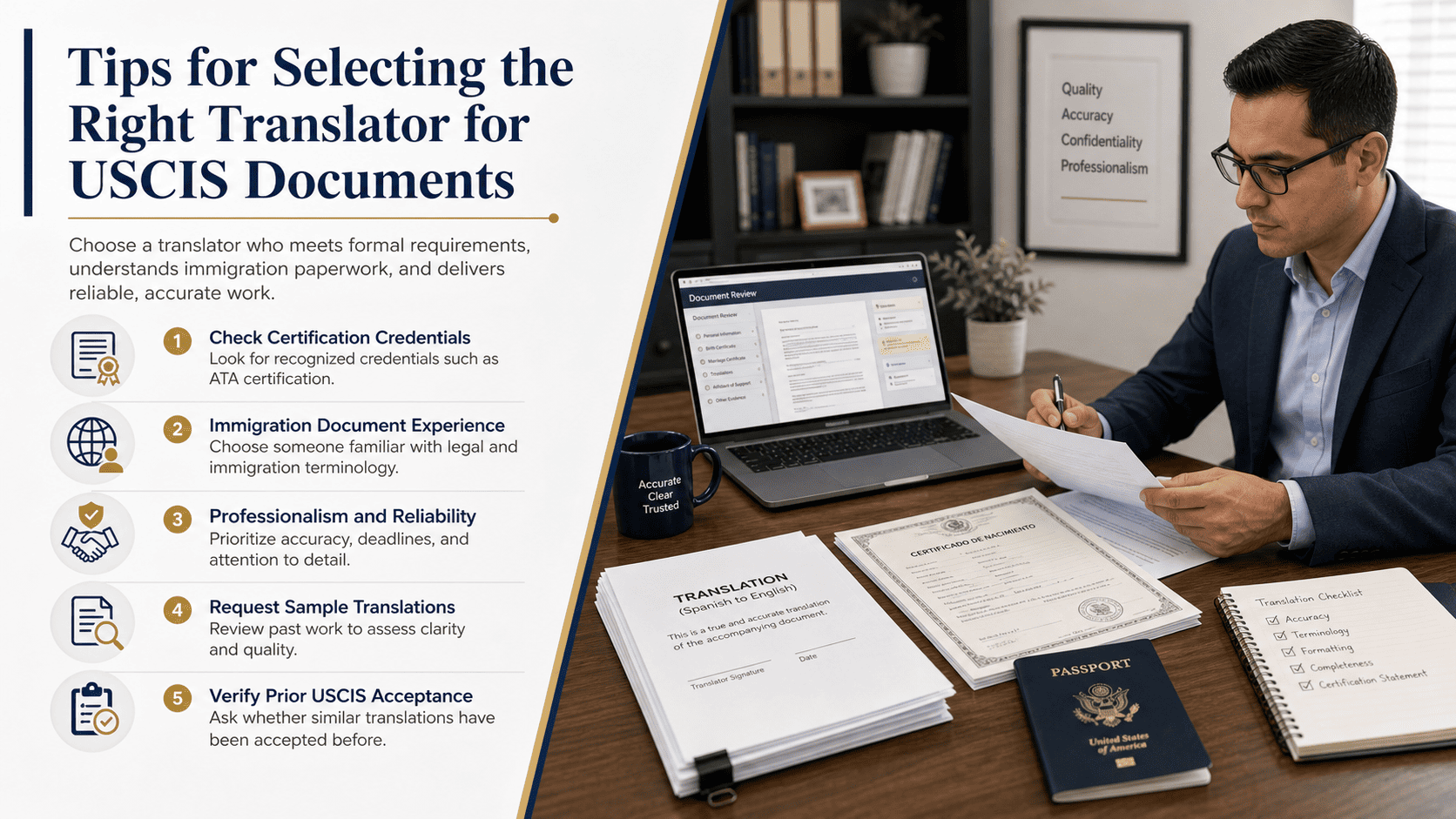
Choosing the right USCIS certified translator is critical to ensuring that your documents are accurately translated and meet USCIS standards. Here are some steps to guide you through selecting the best translator for your immigration needs:

Tips for Selecting the Right USCIS Certified Translator:

  • Check Certification Credentials: Make sure the translator holds the proper certifications from recognized authorities such as the American Translators Association (ATA). Certified translators will be familiar with USCIS’s specific translation requirements.
  • Experience with Immigration Documents: Choose a translator who specializes in translating legal and immigration-related documents. This ensures they understand the unique terminology and requirements of USCIS.
  • Look for Professionalism and Reliability: Select a translator who is known for their professionalism, timely service, and attention to detail. You want a translator for immigration documents who can meet deadlines and deliver precise translations.
  • Request Sample Translations: Before hiring a translator, request sample translations to ensure their work meets your expectations and adheres to USCIS guidelines.
  • Verify Acceptance by USCIS: Confirm that the translator’s work has been accepted by USCIS in the past, ensuring their translations meet official standards.

By following these steps, you can select a USCIS certified translator who will provide accurate and professional translations, ensuring your documents are accepted without delay or complications.

Conclusion

Understanding the difference between a USCIS certified translator and a USCIS approved translator is essential for successfully navigating the immigration process. While both types of translators can help, certified translators offer the legal assurance and accuracy required for submitting official documents to USCIS. To avoid delays or rejections, it’s always best to work with a certified translator who specializes in immigration documents.

At Connected Translations, we provide certified translation services for USCIS, ensuring that your documents meet all necessary requirements and are processed smoothly. Our professional translators are experienced in legal and immigration terminology, giving you confidence that your application will proceed without issues.

Contact us today for your USCIS certified translation needs and take the first step toward a smooth immigration process.

Key Takeaways:

  • Certified translators are required for official USCIS translations, ensuring legal compliance.
  • A USCIS certified translator guarantees the accuracy and reliability of your documents.
  • USCIS approved translators may not offer the same certification, making them less reliable for immigration purposes.
  • Professional certified translation services streamline your immigration process by providing accurate and accepted translations.

Looking for fast and certified translations? Get your free quote now!


Contact Us

Dominique Gomez is a writer and content strategist with a deep curiosity for how language shapes connection across cultures. With over ten years of experience crafting digital content for global audiences, Dominique brings a thoughtful and practical voice to the Connected Translations blog.

Published

Frequently Asked Questions

What is the difference between a USCIS certified translator and a regular translator?

A USCIS certified translator provides a certification statement attesting to the accuracy of the translation, making it legally valid for immigration purposes. Regular translators do not provide this level of assurance.

Do I need a USCIS certified translator for my marriage certificate?

Yes, USCIS requires certified translations of all foreign language documents, including marriage certificates, for immigration purposes.

Can I use an USCIS approved translator for my immigration documents?

While USCIS approved translators may provide competent services, it’s best to use a certified translator to ensure the translation meets USCIS standards and avoid potential issues.

How do I know if a USCIS certified translator is qualified?

Check for certification from recognized bodies like the American Translators Association (ATA). A qualified translator will have the necessary credentials to provide accurate translations.

How long does it take to get certified translations for USCIS?

The time frame for receiving certified translations varies, but most professional services can complete translations within a few days. Always plan ahead to avoid delays in your immigration process.

Get More from This Article

AI is a valuable tool for exploration, but it cannot replace the precision, cultural context, and legal validity of certified translation

Instantly generate summaries,highlights,or insights with AI

==
Certified Translation From Only per Word! Translate Now