.webp)

How Translators Can Assist with Refugee and Asylum Applications

Summary
Translators play a crucial role in refugee and asylum applications by ensuring clear, accurate, and legally compliant communication. Applicants are often required to submit personal and legal documents—such as birth certificates, identification papers, and police records—in the official language of the host country. Certified translators ensure these documents are translated accurately and accepted by immigration authorities.
Beyond paperwork, translators help asylum seekers communicate their personal stories, which are central to proving the need for protection. These narratives often involve sensitive and traumatic experiences, making accuracy and cultural understanding essential.
Translators with legal expertise also help applicants navigate complex immigration terminology and procedures, reducing misunderstandings that could delay or jeopardize an application. By bridging language barriers, certified translation services support refugees and asylum seekers in presenting their cases clearly, fairly, and in compliance with legal requirements.
The process of seeking refuge or asylum is often overwhelming, especially when applicants are required to submit documentation in a language that is not their own. Refugees and asylum seekers typically come from conflict zones or regions affected by persecution, and they often arrive in new countries with little more than their hopes for safety and a better life. In such high-stakes situations, accurate communication is critical—and this is where translators play a vital role.
1. Ensuring Accurate Documentation
One of the most important parts of any asylum or refugee application is submitting the correct documents, such as birth certificates, marriage certificates, identification papers, and police records. These documents are usually in the applicant’s native language and must be translated into the official language of the country where they are seeking refuge. A certified translation ensures that these documents are accepted by immigration authorities without question, as inaccuracies or mistranslated can delay or even jeopardize the entire process.
Translation companies like Connected Translations specialize in providing certified translations that meet the strict requirements of immigration services. With certified translators, applicants can rest assured that their personal documents are being accurately translated with the highest level of professionalism.
2. Helping to Communicate Personal Stories
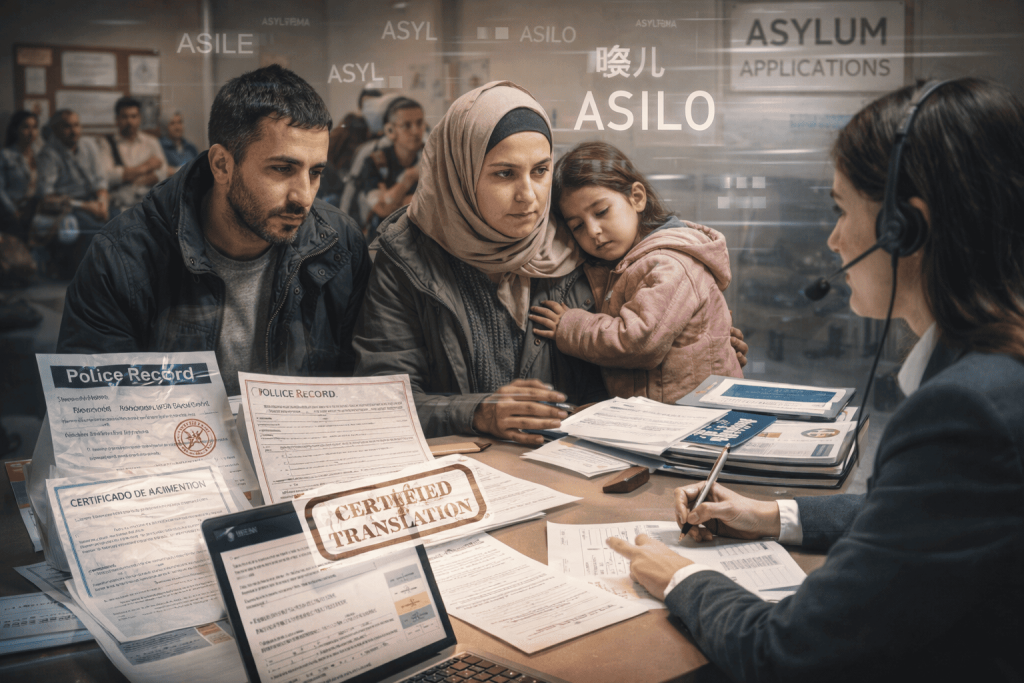
For asylum seekers, sharing their personal story is a crucial part of the application. They must explain the reasons they are fleeing their home country—whether due to war, political persecution, or other dangers—and why they fear returning. Translators help by converting these complex and sensitive narratives into another language with clarity and precision. This step is critical because immigration officers need to understand the applicant’s full story in order to make informed decisions.
Given the emotional weight behind these stories, it is essential that translators are not only accurate but also sensitive to the personal and often traumatic nature of the narratives.
3. Navigating Legal Terminology
Asylum and refugee applications involve navigating a complex legal landscape that includes specific terminology and procedures. Translators who specialize in legal translation can ensure that the applicant fully understands the legal implications of the documents they are submitting, as well as the process itself. This understanding is essential for making informed decisions throughout the application process.
4. Certified Translation for Legal Compliance
Many countries require that all submitted documents be translated by a certified translator to ensure authenticity and accuracy. Connected Translations, as a certified translation company, provides translations that are recognized by immigration authorities and courts. This guarantees that refugees and asylum seekers meet the necessary legal standards when submitting their applications.
By partnering with certified translation services like Connected Translations, refugees and asylum seekers can navigate the challenging process of securing safety and protection in a new country. Translators act as a vital bridge, helping to ensure that applicants’ stories and documents are communicated accurately and effectively.

Daniel Brooks is a New York City-based writer and content strategist with a deep curiosity for how language shapes connection across cultures. With over ten years of experience crafting digital content for global audiences, Daniel brings a thoughtful and practical voice to the Connected Translations blog.