.webp)

AI in Localization: How Artificial Intelligence Is Shaping Global Businesses

Summary:
Artificial intelligence is transforming localization by enabling businesses to communicate faster and more effectively with global audiences. AI-powered tools such as neural machine translation, sentiment analysis, and data-driven personalization allow companies to localize content at scale, reduce costs, and adapt messaging in real time. These technologies are especially valuable for e-commerce, global marketing, and international customer support. AI also automates repetitive tasks, freeing human experts to focus on refining language, context, and cultural relevance. However, AI alone cannot capture nuances, idioms, or cultural sensitivities. This is why certified translation providers like Connected Translations combine advanced AI tools with skilled linguists to ensure accuracy and authenticity. By blending technology with human expertise, businesses can build trust, enhance customer engagement, and compete successfully in international markets.
In today’s hyper-connected world, businesses are expanding their reach across borders, languages, and cultures. To thrive in this global marketplace, effective communication with diverse audiences is paramount. Artificial intelligence (AI) has emerged as a transformative force in localization, reshaping how businesses engage customers and streamline operations.
AI-powered tools have revolutionized translation and localization processes. From neural machine translation (NMT) to sentiment analysis, AI enables faster and more accurate translations than traditional methods. This efficiency is critical for businesses needing to adapt content for international audiences in real time, such as e-commerce platforms, global marketing campaigns, or international customer support. With advancements in AI, companies can localize at scale, ensuring their messaging resonates with diverse cultures without compromising quality.
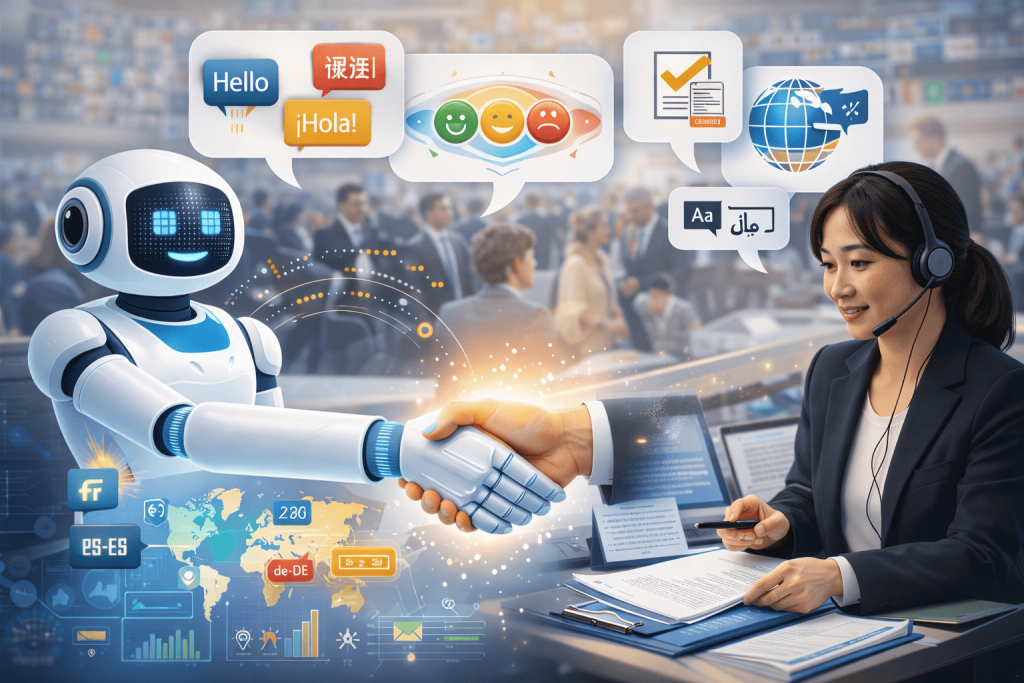
One significant benefit of AI in localization is its ability to handle complex, large-scale projects while reducing costs. By automating repetitive tasks, such as translating product descriptions or website interfaces, AI allows human experts to focus on refining and contextualizing content. For example, AI can quickly generate draft translations, which certified translation companies like Connected Translations can fine-tune to meet high-quality standards. This collaboration between AI and human expertise ensures businesses receive accurate and culturally sensitive translations.
Another area where AI excels is personalization. Modern AI systems can analyze data to tailor content to specific regional preferences, dialects, and cultural nuances. This capability empowers businesses to connect with audiences on a deeper level, fostering trust and loyalty. AI-driven insights also help companies identify emerging trends in international markets, enabling proactive strategy adjustments.
Despite these advantages, AI alone cannot replace human judgment in translation and localization. Nuances, idiomatic expressions, and cultural sensitivities often require human expertise to avoid miscommunication or unintended offense. That’s why businesses rely on trusted certified translation providers like Connected Translations. By combining AI technology with skilled linguists, Connected Translations delivers precise and culturally appropriate localization services to help businesses succeed globally.
As AI continues to evolve, its role in localization will only expand, offering new opportunities for innovation and efficiency. However, the human touch will remain vital in ensuring authenticity and connection in global communications.
For businesses looking to compete on the world stage, leveraging AI in localization—alongside certified expertise from providers like Connected Translations—is a winning strategy. Together, they bridge linguistic and cultural gaps, enabling businesses to speak the language of success.

Daniel Brooks is a New York City-based writer and content strategist with a deep curiosity for how language shapes connection across cultures. With over ten years of experience crafting digital content for global audiences, Daniel brings a thoughtful and practical voice to the Connected Translations blog.