.webp)

Cultural Differences Between Mexico and the United States: A Quick Guide
Summary
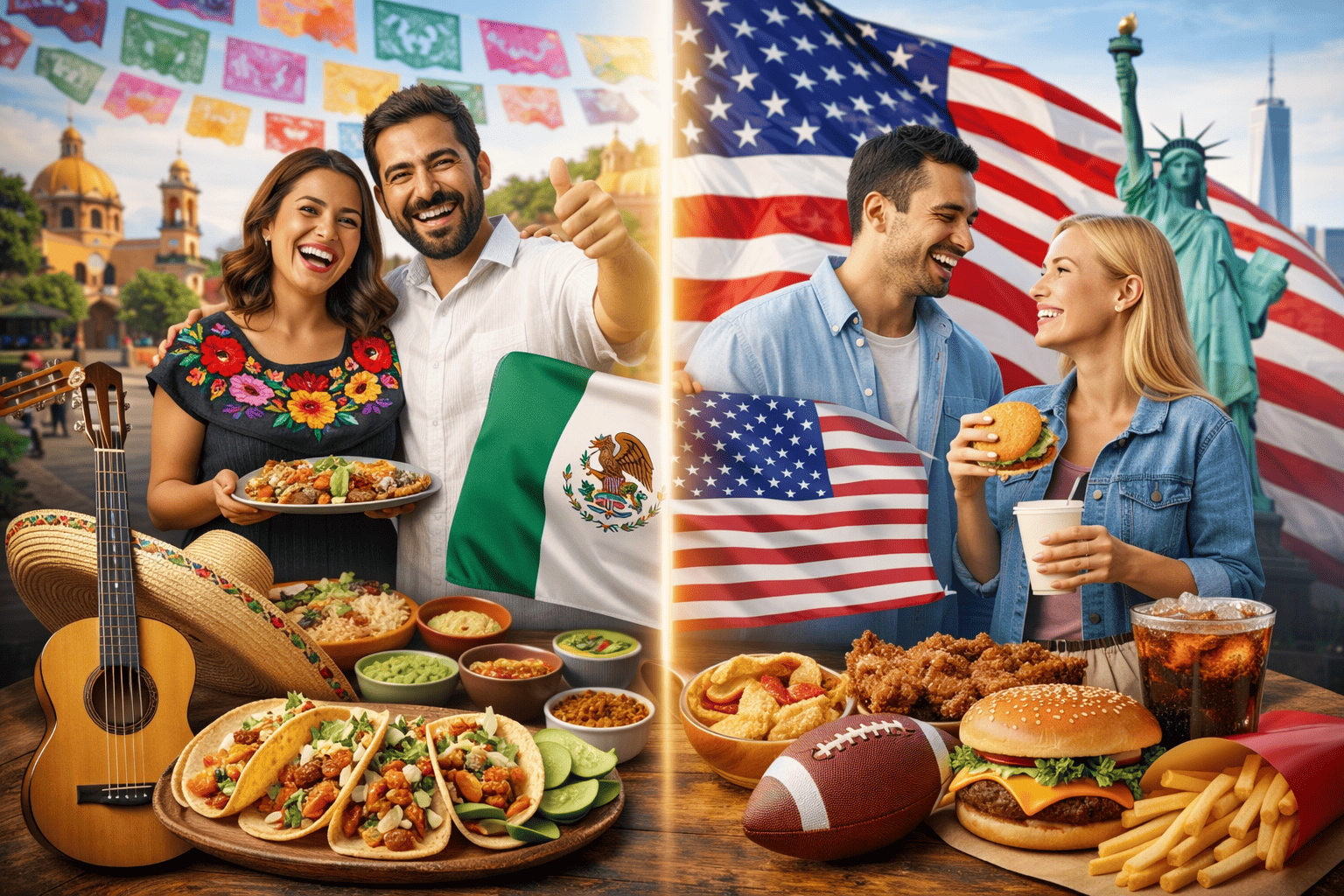
Although Mexico and the United States share a border, their cultural values shape daily life in very different ways. Mexican culture centers on family, community, and shared responsibility, while American culture emphasizes independence and personal achievement. These differences are clear in family structures, with extended families playing a central role in Mexico and nuclear families being more common in the U.S. Food traditions also reflect these values—meals in Mexico are social experiences meant to be shared, whereas American dining often prioritizes convenience and individual portions. Social etiquette further highlights the contrast, as Mexican interactions tend to be warmer, more formal, and flexible with time, while Americans value direct communication, personal space, and punctuality. Understanding these cultural distinctions helps travelers, professionals, and students communicate more respectfully and navigate cross-cultural interactions with greater confidence.
1. Family and Social Structure: Mexican vs American Culture
Family is a cornerstone of both Mexican and American societies, but the way families function in these two countries is quite different. Understanding these differences can make a significant impact when interacting with people from either culture.
Family in Mexico
In Mexico, the family is seen as the central unit of society. The concept of familismo means family is not just an immediate concern but often extends across generations. Here are some characteristics of family life in Mexico:
- Extended families: It’s common for grandparents, aunts, uncles, and even great-grandparents to live under the same roof or in close proximity. Older family members often play a central role in guiding decisions related to career, marriage, and financial matters.
- Respect for elders: In Mexican culture, elders are highly respected and often have the final say in family decisions. Their advice is valued, and it’s expected that younger family members seek their counsel on major life choices.
- Big family gatherings: Celebrations like birthdays, quinceañeras, and weddings are massive, involving many family members and sometimes even friends. Food plays a major role, with meals being shared and the focus on collective enjoyment rather than individual portions.
This collective approach to family life emphasizes strong emotional ties, close-knit support networks, and communal living.
Family in the United States
In the U.S., family structure tends to focus on the nuclear family. While extended families still play a role, there is greater emphasis on personal independence and self-reliance. Key differences include:
- Nuclear families: In the U.S., families typically consist of parents and their children. Extended family members like aunts, uncles, or grandparents may live in different cities or even states, making multi-generational homes less common.
- Independence: From a young age, children are encouraged to be independent. It’s common for young adults to leave home for college or to pursue job opportunities, fostering a culture of self-sufficiency.
- Smaller, more individual-focused gatherings: While holidays like Thanksgiving and Christmas are still family-oriented, they are usually centered around smaller groups. Meals tend to be more individualized, with each family member having their own plate.
This focus on individualism allows for more personal autonomy but can sometimes mean families are less physically close than those in Mexico.
2. Food and Dining: How Meals Reflect Cultural Values
What people eat and how they eat it tells a lot about their cultural values, and the food cultures in Mexico and the United States are no exception. The role of food in both cultures highlights contrasting values of community versus individuality.
Food in Mexico
In Mexico, food is more than just sustenance—it’s about community and bonding. Meals are often seen as opportunities to gather, share stories, and celebrate relationships. Here are some characteristics of Mexican food culture:
- Shared meals: Tacos, tamales, and mole are often shared among family and friends. It’s not unusual to see plates passed around the table, with everyone helping themselves.
- Big meals with long durations: The biggest meal of the day (comida) is traditionally served around 2 p.m. and can last two hours or more. People enjoy food while catching up on family matters or simply enjoying each other’s company.
- Traditional ingredients: Mexican cuisine relies heavily on corn, beans, chilies, and local herbs. Depending on the region, different specialties emerge, such as mole in Oaxaca or seafood stews in Veracruz.
This communal and family-focused approach to food highlights the importance of hospitality, connection, and the relationship between people and their environment.
Food in the United States

American food culture is diverse but also reflects a fast-paced lifestyle driven by convenience. Here’s what makes American food culture unique:
- Fast food culture: The rise of fast food chains like McDonald’s, Burger King, and Taco Bell has cemented convenience as a priority. Meals are typically quick and easily accessible, especially for people with busy schedules.
- Individual servings: Unlike Mexico’s shared meals, American meals tend to focus on individual servings, with people often eating meals like hamburgers, fries, and soda by themselves or with a smaller group.
- Cultural fusion: American cuisine has been influenced by many cultures, resulting in a melting pot of flavors. You’ll find everything from Italian pizza in New York to Mexican tacos in California, reflecting the diversity of the U.S.
This individual and fast-paced approach to food underscores the U.S.’s focus on convenience, personal choice, and a desire to maintain efficiency in everyday life.
3. Social Etiquette: Navigating Mexican and American Interactions
Social etiquette in both Mexico and the United States plays a crucial role in shaping relationships. However, these two countries have different expectations when it comes to communication, greetings, and manners.
Etiquette in Mexico
In Mexico, social interactions are warm, personal, and collectivist. Key aspects of Mexican social etiquette include:
- Formal language: When speaking to strangers or people in authority, Mexicans use the formal “usted” instead of the informal “tú”. This shows respect and deference to others, especially elders or authority figures.
- Physical contact: Hugging and cheek kissing are common social gestures, even when meeting acquaintances for the first time. Handshakes are also common in more formal settings.
- Punctuality: Mexicans generally have a more relaxed attitude toward time. It’s often acceptable to be a few minutes late, especially in social situations like family gatherings or dinner parties.
Etiquette in the United States
In contrast, American social etiquette tends to be more individualistic, with an emphasis on personal space and punctuality. Key characteristics include:
- Direct communication: Americans generally prefer directness in conversation. It’s common to use “you” in everyday interactions, even with someone in a higher position.
- Personal space: Personal space is important in American culture, and physical contact is more reserved. A handshake or a brief hug is common, but people generally prefer to maintain a certain distance during conversations.
- Punctuality: Being on time is highly valued in the U.S. Especially in professional settings, arriving late can be seen as disrespectful.
These differences in social etiquette are indicative of the broader cultural differences between the collectivist nature of Mexico and the individualistic nature of the United States.
4. Personal Values: Collectivism vs. Individualism
The cultural divide between Mexico and the United States can be traced back to their respective values of collectivism and individualism.
Collectivism in Mexico
In Mexico, familismo (the importance of family) plays a significant role in personal identity. Some features of the collectivist side of Mexican culture include:
- Group identity: In Mexico, a person’s identity is often tied to the family name, community, or region. The needs of the group, particularly the family, are prioritized over the individual.
- Mutual support: It’s common for Mexicans to help their extended family members with various tasks, such as finding a job or lending money.
- Indirect communication: Mexicans tend to avoid direct confrontation or harsh words, particularly when speaking to family members. The goal is to maintain harmony within the group.
Individualism in the U.S.
In the United States, individualism is deeply ingrained in the culture. Personal success and self-reliance are emphasized, and people are encouraged to pursue their own goals, even if it means leaving family behind. Some features of the individualist side of American culture include:
- Personal achievement: Success is defined by individual accomplishments, such as a promotion, college degree, or owning a home.
- Independence: Americans are often expected to move away from home at a young age and pursue their own career and life goals.
- Direct communication: Americans tend to value honesty and clarity in conversations, preferring direct communication over indirectness.
Conclusion: Embracing the Cultural Differences Between Mexico and the United States
While Mexico and the United States share a border, the cultural distinctions between the two countries are significant. From family structure to food habits and social etiquette, these differences reflect the contrasting values of collectivism and individualism. Understanding and respecting these differences can lead to more meaningful interactions, whether you’re visiting, working, or studying abroad.

Daniel Brooks is a New York City-based writer and content strategist with a deep curiosity for how language shapes connection across cultures. With over ten years of experience crafting digital content for global audiences, Daniel brings a thoughtful and practical voice to the Connected Translations blog.