.webp)

Do Marriage Certificate Translations Require Notarization? | The Spanish Group
Summary
Do marriage certificate translations really need notarization—or is certification enough? This article clears up one of the most common sources of confusion in immigration and legal paperwork. It explains the critical difference between notarized and certified translations, when notarization may actually be required, and why most U.S. agencies—including USCIS—only ask for certification. You’ll learn how improper translations lead to delays, rejections, and unnecessary stress, and what authorities truly look for when reviewing marriage documents. If you’re submitting a marriage certificate for visas, legal filings, or official records, this guide helps you avoid costly mistakes and get it right the first time.
1. Understanding Marriage Certificate Translations
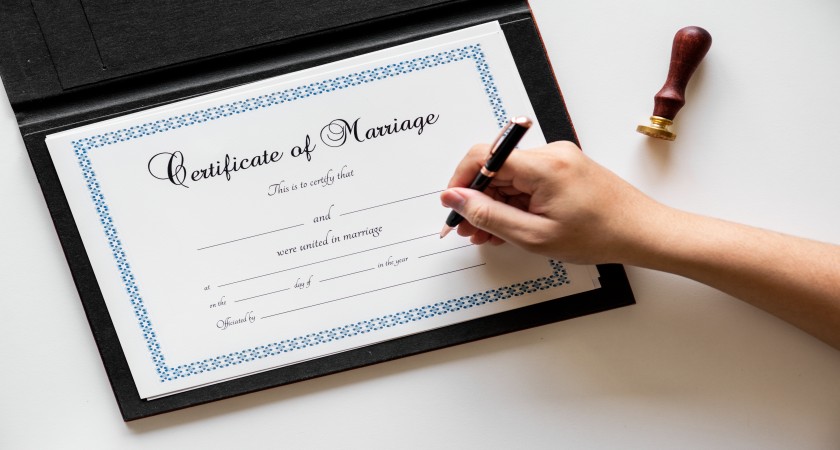
A marriage certificate translation is an essential document for a variety of legal and immigration processes. Whether you’re applying for a visa, updating records with immigration authorities, or handling estate matters, accurate translations of your marriage certificate are crucial.
The translation of a marriage certificate ensures that all relevant details, including the names of the couple, date of marriage, and place of marriage, are accurately conveyed in a different language. For most legal purposes, this translation needs to be certified.
However, notarization is often confused with certification. The key difference between these two processes is critical for those navigating legal or immigration systems.
Key Takeaway: Marriage certificate translations ensure that your official records are understood in the language required by authorities.
2. Notarization vs. Certification: What’s the Difference?
To understand the role of notarization, it’s important to distinguish between certified translations and notarized translations:
- Certified Translation: A certified translation comes with a signed statement from the translator (or the translation agency) attesting to the accuracy and completeness of the translation. This certification is crucial for legal or official documents, such as a marriage certificate, especially when submitted to authorities like USCIS, courts, or government agencies.
- Notarized Translation: Notarization, on the other hand, is a process where a notary public verifies the identity of the translator (or translator’s agency) and certifies that the document is authentic. The notary does not verify the translation’s accuracy but instead affirms that the translator is who they claim to be.
While notarization can add an extra layer of verification, it is not always required for marriage certificate translations. What matters most is the certified translation, ensuring that the translated content is an accurate reflection of the original document.
Key Takeaway: Certification validates the translation, while notarization validates the identity of the translator.
Yellow Subsection:
Certification Validates Accuracy, Not Notarization
3. When Is Notarization Required for Marriage Certificates?
In most cases, a marriage certificate translation does not require notarization. However, there are certain situations where notarization may be requested or beneficial:
- Some legal cases: In certain legal processes, such as court cases or international estate matters, notarization may be required to authenticate the translator’s identity, though this is not typical for all submissions.
- Specific country requirements: Some foreign governments may require notarization for immigration or visa applications, though this is country-specific and not a universal requirement.
- Special requests from clients: If you are working with a lawyer or a government agency that requests notarization for specific purposes, it’s important to follow those guidelines.
For most US-based immigration processes, a certified translation of a marriage certificate is sufficient without notarization. It’s essential to check with the relevant authority—whether it’s USCIS, the court, or a government agency—to confirm their specific requirements.
Key Takeaway: Notarization is not typically required for marriage certificate translations, but it may be necessary in some legal or international cases.
4. Why Certified Translation Is Crucial for Marriage Certificates
When translating a marriage certificate, certification ensures that the translation is legally acceptable and accurate for immigration or legal proceedings. The significance of using certified translation services cannot be overstated. Here’s why:
- Accuracy: Legal documents must be translated with the utmost precision. A professional translator ensures that all names, dates, and other key details are correctly translated.
- Legal Compliance: Agencies like USCIS, courts, or foreign governments will not accept translations that are not certified. A certified translation confirms that the document is an official, accurate representation of the original.
- Avoiding Rejection: Without a certified translation, your application or submission could be delayed, rejected, or sent back for further review. This could lead to additional costs and time.
For example, if you’re applying for a spouse visa, USCIS requires that all foreign-language documents, such as your marriage certificate, be certified translated. Failure to do so could lead to a rejection of your petition.
Key Takeaway: Certified translation is necessary for the legal acceptance of marriage certificates in immigration and legal matters.
5. Common Mistakes and How to Avoid Them
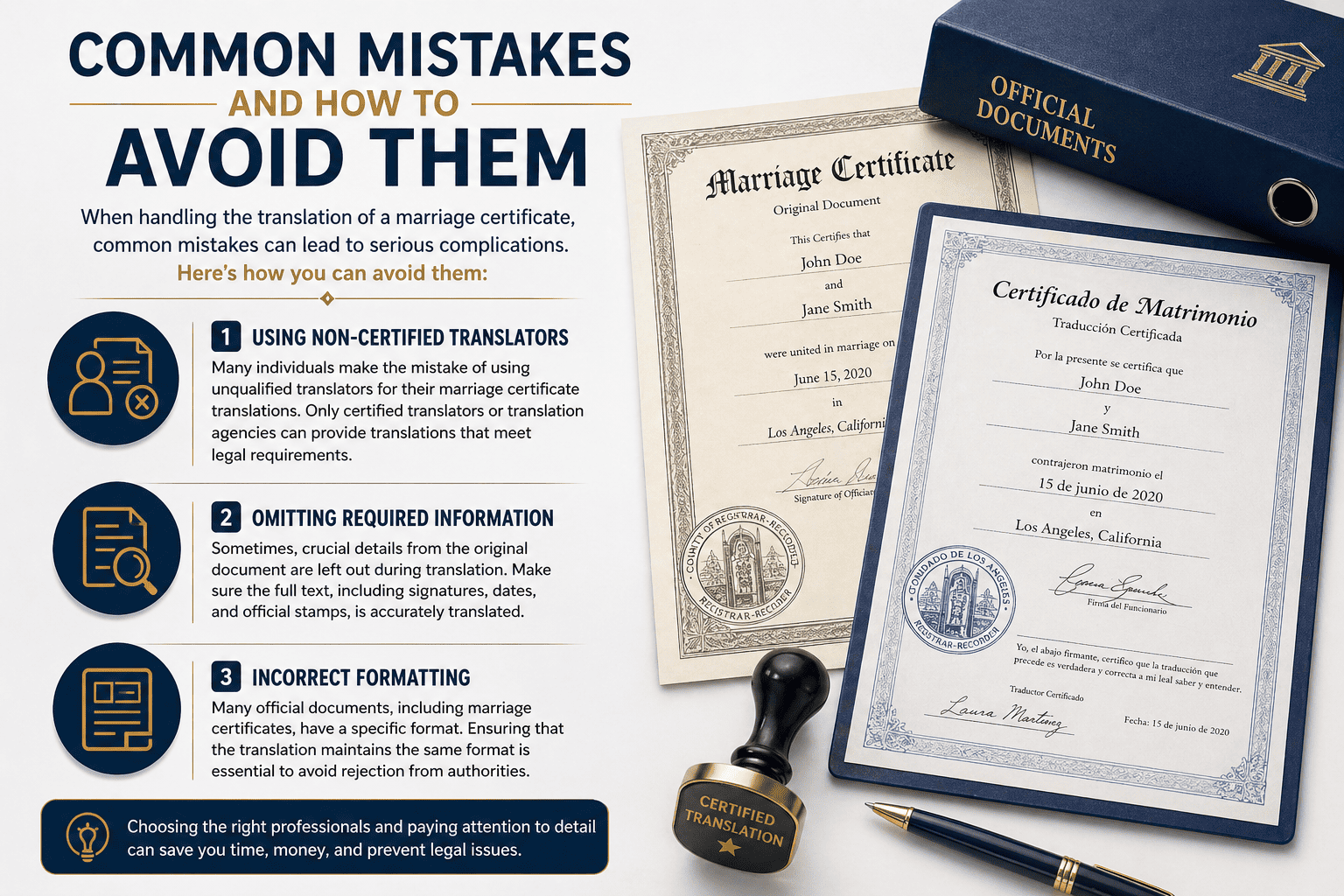
When handling the translation of a marriage certificate, common mistakes can lead to serious complications. Here’s how you can avoid them:
- Using Non-Certified Translators: Many individuals make the mistake of using unqualified translators for their marriage certificate translations. Only certified translators or translation agencies can provide translations that meet legal requirements.
- Omitting Required Information: Sometimes, crucial details from the original document are left out during translation. Make sure the full text, including signatures, dates, and official stamps, is accurately translated.
- Incorrect Formatting: Many official documents, including marriage certificates, have a specific format. Ensuring that the translation maintains the same format is essential to avoid rejection from authorities.
Real-World Scenario:
A couple from India submits their marriage certificate as part of their spouse visa application. They use a non-certified translator who omits critical information and fails to properly format the document. USCIS returns the application for correction, delaying the entire process and adding unnecessary stress and costs. By using a professional service like The Spanish Group, they could have avoided this costly mistake.
Key Takeaway: Avoid delays and rejections by using certified translators and ensuring complete, accurate, and correctly formatted translations.
Conclusion
When it comes to translating marriage certificates, notarization is generally not required. However, a certified translation is essential for ensuring that the document is legally valid for immigration, legal, and governmental purposes. Using a trusted and certified translation service, such as The Spanish Group, ensures that your marriage certificate is accurately translated and meets all necessary requirements, preventing costly delays and rejections.
Key Takeaways
- Marriage certificate translations generally don’t require notarization but must be certified.
- Certified translations ensure accuracy and legal compliance for immigration and legal matters.
- Avoid mistakes and delays by choosing certified translation services, such as those offered by The Spanish Group.