.webp)

Is ATA Certification Mandatory for Legal and Immigration Translations?

Summary
When it comes to legal and immigration documents, precision and accuracy are crucial. While ATA certification is not always required by law, it is highly recommended for ensuring that your translations meet legal and procedural standards. In this post, we will explore the importance of American Translators Association ATA certification for legal and immigration translations and how choosing certified professionals can help you avoid delays, denials, and legal risks.
What Is ATA Certification and Why It Matters
When you need translations for legal or immigration purposes, ATA certification offers a significant advantage. The American Translators Association (ATA) is the largest professional association for translators in the U.S., and obtaining ATA certification is a mark of excellence in the industry.
To achieve certification, a translator must pass a rigorous exam that tests both linguistic proficiency and knowledge of translation techniques.
ATA-certified translators are recognized for their ability to provide accurate and reliable translations in a professional and ethical manner, which is especially important for legal and immigration documents.
For instance, if you are submitting a marriage certificate as part of a family-based immigration petition, having an ATA-certified translator ensures the translation is accurate and professionally handled. This is because ATA Certification shows that the translator has passed strict qualifications and understands the importance of translating legal terms correctly.
Key Takeaway: ATA certification supports the quality and reliability of translations, particularly for immigration and legal matters.
The Role of Translation in Legal and Immigration Processes
In both legal and immigration processes, translated documents play an important role. Whether you are applying for a visa, green card, or citizenship, your supporting documents such as birth certificates, marriage licenses, and court orders may need to be translated into English.
USCIS and legal authorities do not just look for literal translations. They require official, certified translations that meet specific standards.
By using an ATA-certified translator, you help ensure that:
- Legal terms are accurately translated
- The translation is complete and unambiguous
- The translation follows the format expected by USCIS or courts
Without a certified translator, even small errors can lead to delays or denials of your petition, causing additional costs, stress, and wasted time.
Key Takeaway: Certified translations are not just a formality. They help avoid costly mistakes in legal and immigration processes.
Legal Requirements vs. Best Practices for Translations
It is important to distinguish between legal requirements and best practices when it comes to translation services. USCIS, for example, does not require translations to be ATA certified. However, it does require translations to be accurate, complete, and certified by the translator as true to the original document.
Here’s the key difference:
- Legal requirement: USCIS or courts require certified translations with a statement from the translator confirming accuracy.
- Best practice: ATA certification is a professional standard that shows the translation is performed by a skilled translator who understands both language and legal terminology.
While you may technically use a translator without ATA certification, you run the risk of errors or omissions in legal translations. For example, a mistranslation of legal terms in a birth certificate or divorce decree could lead to application rejection or delays in your immigration process.
Key Takeaway: While ATA certification is not strictly required, it is considered a best practice for reliable, legally compliant translations.
Consequences of Using Non-Certified Translators
Choosing a non-certified translator or using an unqualified service can create serious problems for your legal or immigration case.
Here are a few potential risks:
- Rejection or delays: If your translations are inaccurate or incomplete, USCIS or the court may reject them or delay processing until they are corrected.
- Legal disputes: In some legal matters, incorrect translations can lead to disputes or misinterpretations that can damage your case.
- Higher costs: Delays or rejections may lead to additional costs for resubmissions, legal fees, and further translation services.
Example Scenario: Imagine you are submitting a divorce decree as part of a family-based immigration petition. If the translation is incorrect and does not accurately reflect the legal terms, USCIS could issue a Request for Evidence (RFE), causing delays that may take several months. This puts your immigration process at risk and could also increase legal costs.
By using ATA-certified translators, you can reduce these risks and help ensure that your documents meet the necessary standards.
Key Takeaway: Non-certified translators can cause delays, legal complications, and unnecessary expenses.
Why You Should Choose ATA-Certified Translators
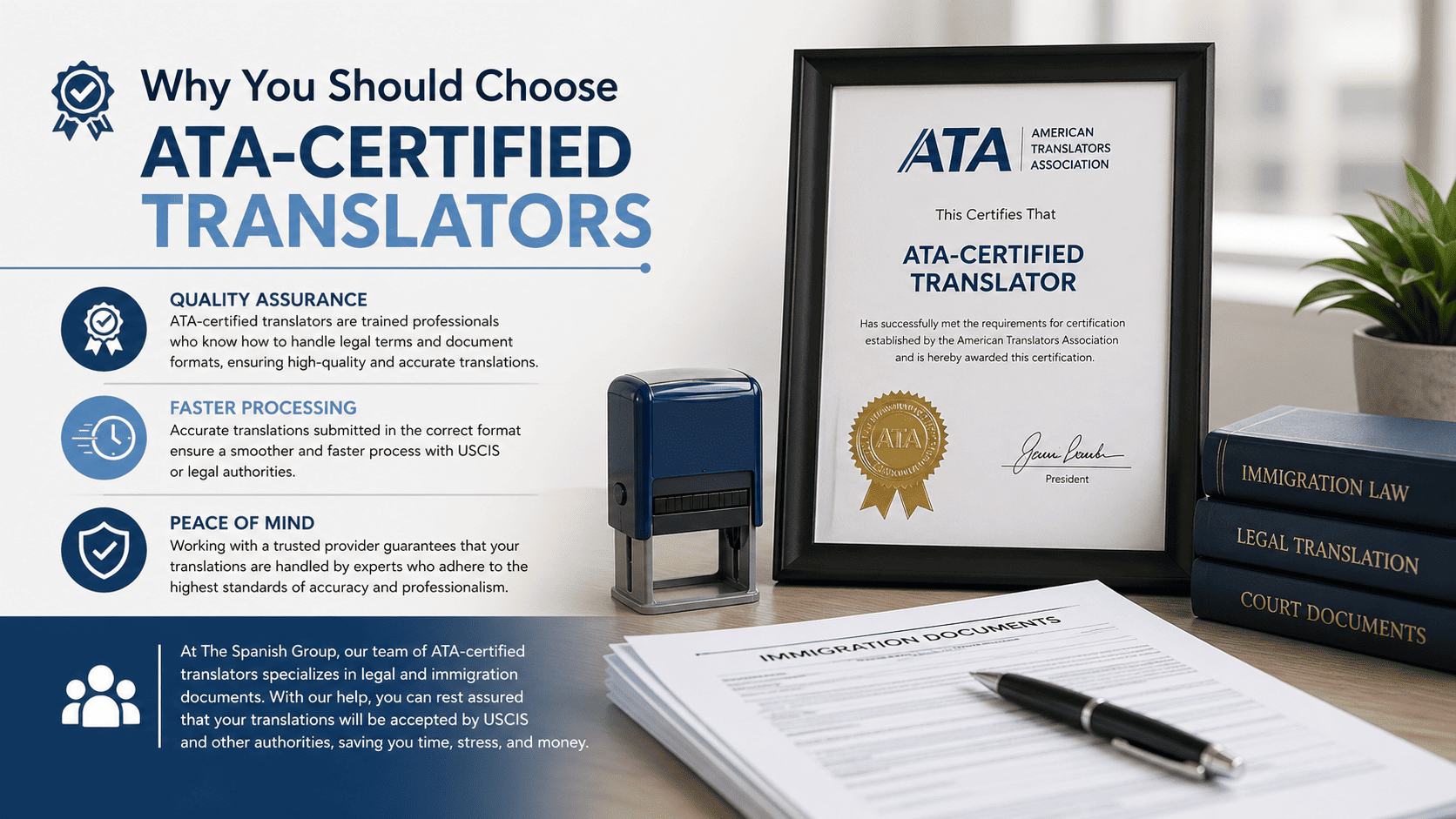
The decision to use ATA-certified translators for legal or immigration translations can make a significant difference in the outcome of your case.
Here’s why:
- Quality assurance: ATA-certified translators are trained professionals who know how to handle legal terms and document formats, helping ensure accurate translations.
- Faster processing: Accurate translations submitted in the correct format can support a smoother process with USCIS or legal authorities.
- Peace of mind: Working with experienced certified translation professionals helps ensure your documents are handled with accuracy and professionalism.
At The Spanish Group, our team of ATA-certified translators specializes in legal and immigration documents. With our help, you can feel more confident that your translations are prepared correctly for USCIS and other authorities, saving you time, stress, and money.
Key Takeaway: ATA-certified translators help ensure that your documents meet legal standards and are processed without unnecessary delay.
Conclusion
While ATA certification may not always be a legal requirement for immigration and legal translations, it is a strong best practice for ensuring accuracy, completeness, and reliability. By choosing ATA-certified translators, you reduce the risk of errors, delays, or rejections and help your legal or immigration process move more smoothly.
When it comes to immigration translation services, Connected Translations offers certified translation services you can trust. Our team of professional translators ensures that your documents meet the necessary standards, giving you peace of mind and allowing you to focus on your future.
Key Takeaways
- ATA certification is a professional standard for reliable translations.
- Certified translations are essential for USCIS and legal document submissions.
- Non-certified translations can lead to delays, legal issues, and increased costs.
- The Spanish Group offers ATA-certified translation services for legal and immigration needs.