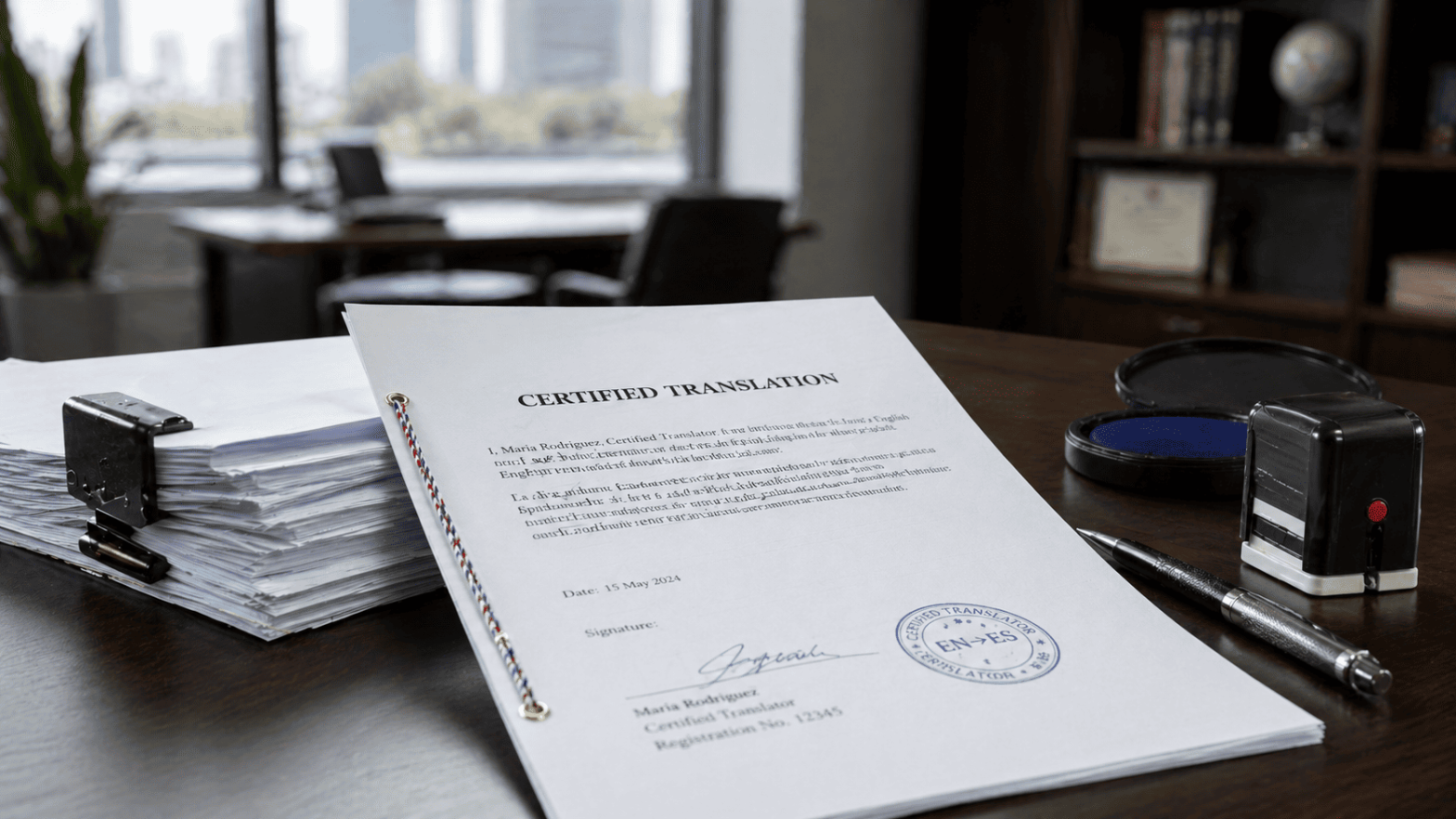

Notarized Translation vs. Certified Translation: Key Differences You Must Know

Summary Not all official translations are treated the same, and choosing the wrong type can delay applications or invalidate documents. This guide explains the real difference between notarized and certified translations, helping readers understand when each is required and why it matters. It breaks down how certified translations focus on accuracy and legal acceptance, while… Continue reading Notarized Translation vs. Certified Translation: Key Differences You Must Know

Why the American Translators Association Matters for Quality Translation

Summary In high-stakes translation, accuracy isn’t optional—it’s essential. This article explains why the American Translators Association (ATA) plays a critical role in maintaining quality, trust, and accountability in the translation industry. It breaks down what the ATA does, how its certification process works, and why ATA-certified translators are widely trusted for legal, immigration, medical, and… Continue reading Why the American Translators Association Matters for Quality Translation

Certified Translation: The Ultimate Checklist for Accuracy and Acceptance

Summary Certified translation isn’t just a formality—it’s often the deciding factor between approval and rejection for legal, immigration, and official documents. This guide explains what certified translation really means, why government agencies like USCIS require it, and how a simple oversight can delay cases or trigger costly legal issues. It walks readers through when certified… Continue reading Certified Translation: The Ultimate Checklist for Accuracy and Acceptance

Certified Translation: The Ultimate Checklist for Accuracy and Acceptance

Summary Certified translations are essential when documents must be accurate, legally valid, and officially accepted. This guide explains what makes a translation “certified,” including accuracy statements, translator credentials, and notarization when required. It outlines when certified translation services are necessary, such as for USCIS immigration filings, court documents, and regulated business records. The article also… Continue reading Certified Translation: The Ultimate Checklist for Accuracy and Acceptance

Apostille and Translation Services: Understanding Key Differences and How to Get Them

Summary When preparing documents for international use, understanding the difference between an apostille and a certified translation can save time and prevent costly delays. An apostille verifies the authenticity of a document so it can be legally recognized in countries that are part of the Hague Convention. A certified translation, on the other hand, ensures… Continue reading Apostille and Translation Services: Understanding Key Differences and How to Get Them

How to Get Apostille and Translation Services in the U.S.

Summary Using official U.S. documents abroad often requires more than just a signature or stamp. This article explains how apostille and certified translation services work together to make documents legally valid for international use. It breaks down what an apostille is, when it’s required, and how the process differs depending on the destination country. The… Continue reading How to Get Apostille and Translation Services in the U.S.

Certified Translation Services: What You Need to Know Before Hiring a Translator

Summary Certified translation services are essential when documents must be legally accepted by government agencies, courts, universities, or immigration authorities such as USCIS. This guide explains what certified translation services are, how they differ from standard translations, and why accuracy and completeness are critical for official use. It covers the role of certified translators, certificates… Continue reading Certified Translation Services: What You Need to Know Before Hiring a Translator

How the American Translators Association Supports Language Professionals

Summary The American Translators Association (ATA) plays a key role in supporting language professionals by setting standards, offering certification, and building a strong professional community. Founded in 1959, the ATA provides translators with access to training, industry advocacy, and networking opportunities that help them grow and stay competitive. ATA certification is widely recognized as a… Continue reading How the American Translators Association Supports Language Professionals

Certified vs Sworn Translators: What’s the Difference and When to Use Each?

Summary Understanding the difference between certified and sworn translators is essential when submitting documents for professional or legal use. Certified translators hold credentials from recognized professional bodies, such as the American Translators Association (ATA), demonstrating their expertise in specific language pairs and subject areas. Their work is commonly used for academic, technical, medical, and business… Continue reading Certified vs Sworn Translators: What’s the Difference and When to Use Each?

What Is a Certificate of Translation Accuracy and Why Do You Need One?

Summary A certificate of translation accuracy is a signed statement from a professional translator confirming that a translated document is complete and faithful to the original. It’s commonly required for official use, such as immigration applications, legal filings, academic records, or business documents. Government agencies, courts, and institutions rely on this certificate to trust that… Continue reading What Is a Certificate of Translation Accuracy and Why Do You Need One?

==
Certified Translation From Only per Word! Translate Now