.webp)

Data Privacy in Translation: What Companies Risk When Uploading Sensitive Documents to AI Tools
Summary
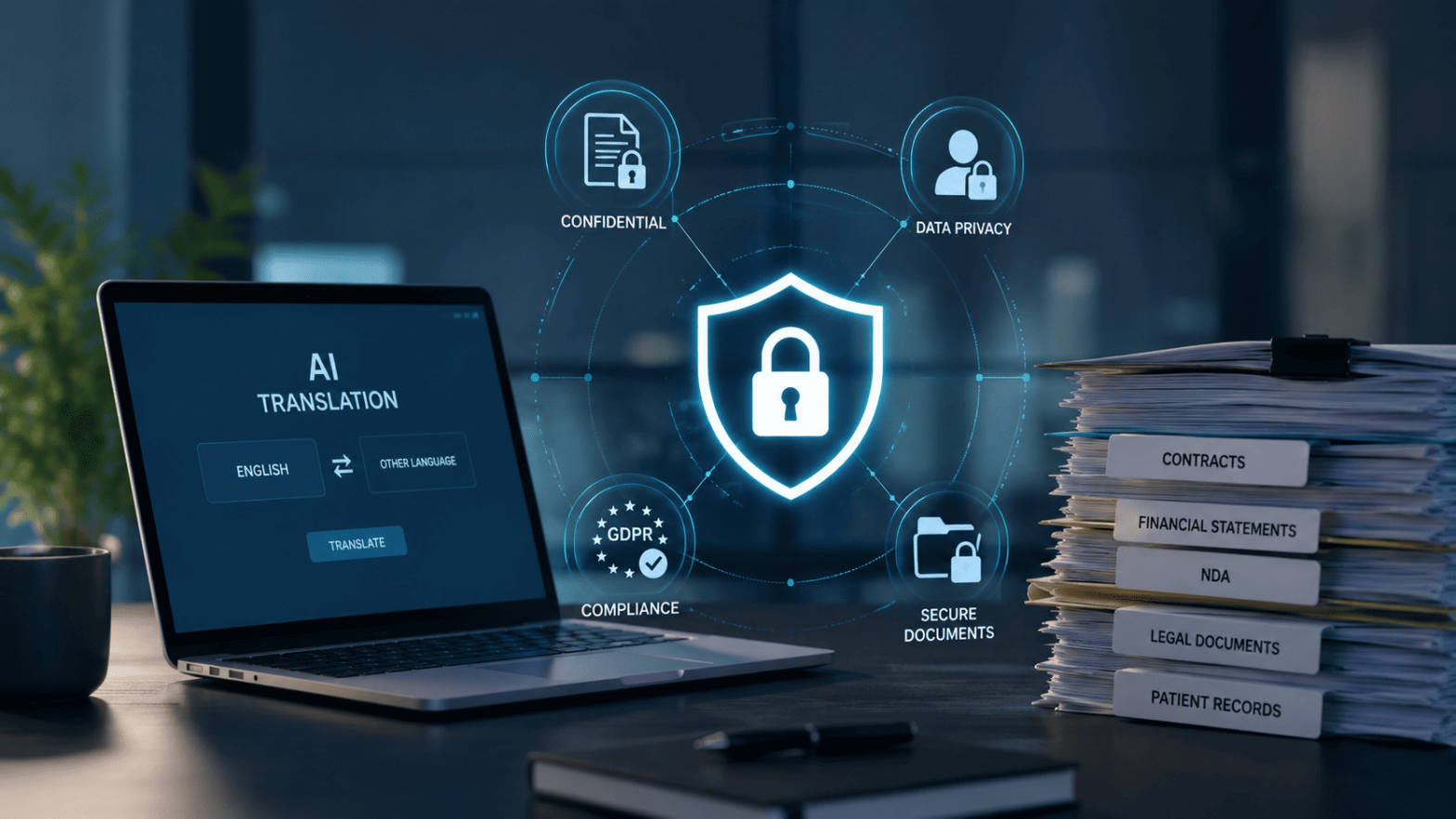
Every day, businesses share critical documents—contracts, financial statements, NDAs—for translation. AI translation tools can seem like a convenient solution, but they also carry hidden dangers. Uploading sensitive documents to these platforms may expose confidential information to cyber threats, regulatory violations, and costly legal consequences. Prioritizing data privacy in translation is no longer optional; it is a business imperative. In this article, we explore the risks of AI translation, the importance of translation security, and why professional services like Connected Translations are essential to protect your data, compliance, and reputation.
1. The Hidden Risks of Uploading Sensitive Documents to AI Translation Tools
AI translation tools promise convenience, speed, and lower costs—but these benefits come with hidden risks that many businesses fail to recognize.
Key risks include:
- Data Breaches: Uploaded documents may be stored, analyzed, or inadvertently shared with third parties. Cyberattacks on AI servers can expose confidential contracts, intellectual property, or financial statements.
- Regulatory Violations: Uploading personally identifiable information (PII) or health data without proper consent can violate GDPR, HIPAA, and CCPA, potentially resulting in substantial fines.
- Loss of Control: Once a document is uploaded to an AI platform, companies often lose the ability to control how the data is stored, used, or accessed.
Real-World Example
A U.S. law firm uploaded a confidential contract to an AI translation tool. Weeks later, parts of that contract appeared in public datasets used to train AI models, potentially exposing key contractual terms to competitors.
Why Professional Translation Matters
AI translation can misinterpret subtle legal language, creating miscommunications that may lead to disputes or litigation. Connected Translations offers secure, certified translations that protect both the accuracy and confidentiality of sensitive documents. Human expertise ensures that every term is interpreted correctly while complying with strict privacy standards.
Supporting Evidence
According to the European Data Protection Board, organizations must ensure that processing sensitive information is secure and compliant. Uploading confidential documents to AI platforms without safeguards is a direct violation of this principle.
2. Translation Security: Beyond Convenience
While AI tools appear efficient, they cannot meet the rigorous security requirements necessary for sensitive corporate information. Translation security involves far more than encryption; it encompasses strict protocols, certified personnel, and regulatory compliance.
Best practices for translation security:
- Confidentiality Agreements: Certified human translators are legally bound to maintain confidentiality, reducing the risk of leaks.
- Encrypted File Transfers: Secure uploads and downloads prevent unauthorized access.
- Access Control: Only authorized personnel should handle sensitive data.
- Audit Trails: Agencies track translation workflows to ensure accountability and traceability.
Adopting these measures reduces the likelihood of data breaches and helps ensure compliance with privacy regulations, protecting your company from legal and financial consequences.
Real-World Implication
A financial institution used an AI translation tool for internal reports containing sensitive client information. A minor technical error exposed partial data to third parties. No regulatory fines were imposed, but client trust was significantly damaged. Professional translation services could have prevented this risk entirely.
Connected Translations combines secure technology with human expertise, delivering accurate translations while keeping sensitive information protected.
3. Common Scenarios Where Mismanaged Translations Cause Issues
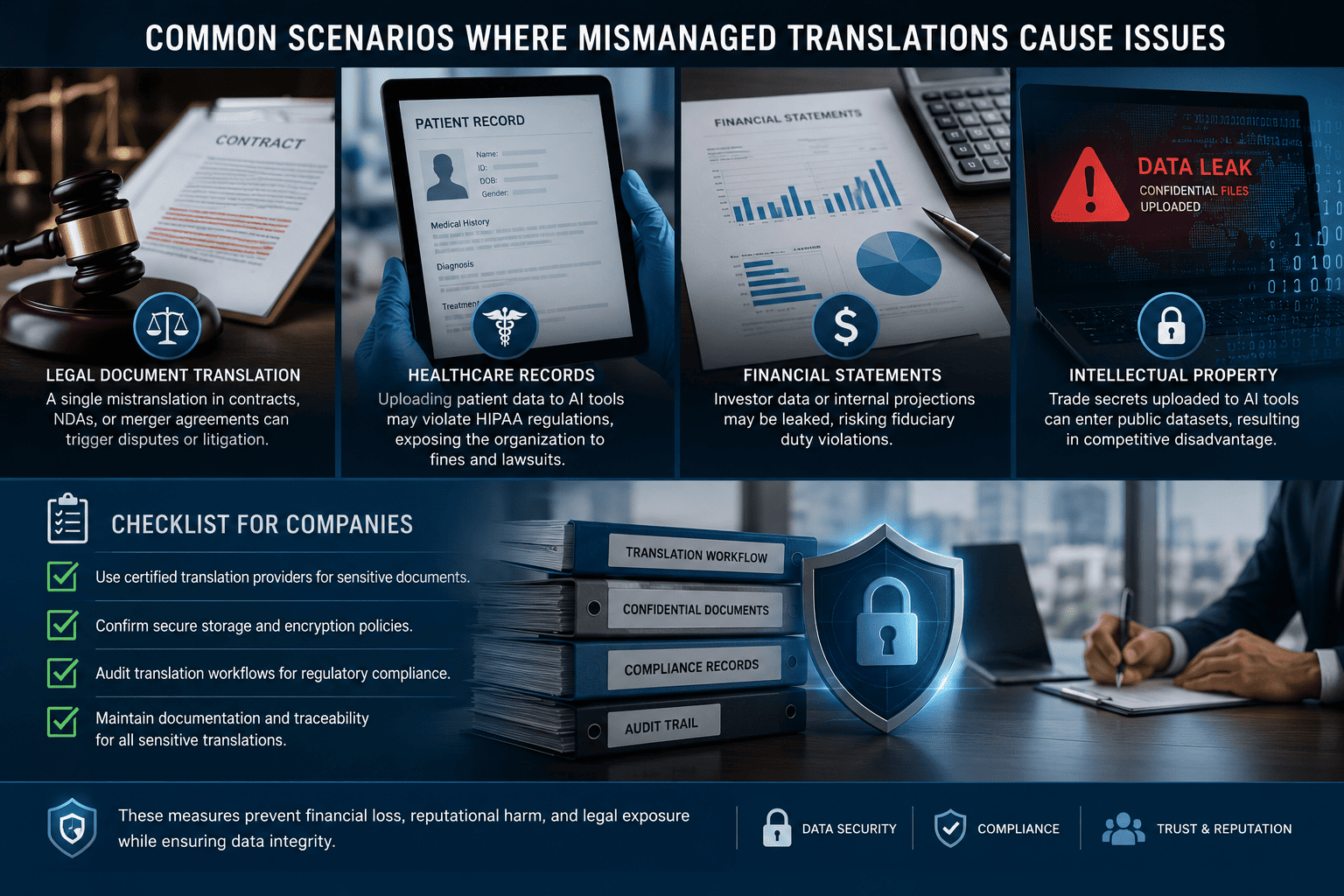
Mismanaged translations can have severe real-world consequences. Common scenarios include:
- Legal Document Translation: A single mistranslation in contracts, NDAs, or merger agreements can trigger disputes or litigation.
- Healthcare Records: Uploading patient data to AI tools may violate HIPAA regulations, exposing the organization to fines and lawsuits.
- Financial Statements: Investor data or internal projections may be leaked, risking fiduciary duty violations.
- Intellectual Property: Trade secrets uploaded to AI tools can enter public datasets, resulting in competitive disadvantage.
Checklist for companies:
- Use certified translation providers for sensitive documents.
- Confirm secure storage and encryption policies.
- Audit translation workflows for regulatory compliance.
- Maintain documentation and traceability for all sensitive translations.
These measures prevent financial loss, reputational harm, and legal exposure while ensuring data integrity.
4. Why Professional Translation Services Remain Critical
Despite the allure of AI translation tools, the risks associated with sensitive content are significant. Professional agencies like Connected Translations provide critical safeguards:
- Certified Expertise: Human translators with industry-specific knowledge ensure accurate, legally compliant translations.
- Confidentiality Assured: NDAs, access controls, and secure systems protect client data.
- Regulatory Compliance: Translations meet HIPAA, GDPR, and other applicable regulations.
- Audit and Traceability: Each step of the translation process is documented to provide accountability.
Scenario Example
A U.S. pharmaceutical company needed translations for clinical trial documentation. Attempting AI translation could have led to misinterpretation of dosage instructions or safety protocols, risking FDA approval. By working with Connected Translations, the company ensured data privacy in translation, accuracy, and compliance, avoiding delays and regulatory issues.
Myth vs. Reality
- Myth: AI translation is sufficient for all business documents.
- Reality: Only certified human translation services can guarantee accuracy, confidentiality, and compliance for sensitive or legal documents.