.webp)

How Much Does It Cost to Translate a Document in 2026?

Summary
If you’re looking to translate a document, understanding the cost involved is crucial. The price for translating a document varies widely depending on multiple factors such as language, document complexity, and urgency. In this blog, we’ll break down the factors that affect document translation costs and provide useful tips to help you budget for your translation needs. Whether you’re dealing with legal, medical, or personal documents, knowing what influences the cost will help you make informed decisions.
1. What Are the Factors That Affect the Cost of Document Translation in 2026?
The cost of translating a document depends on a variety of factors. Knowing these factors can help you prepare and even save money on your translation project. Here’s a closer look at what influences translation prices:
A. Language Pair
- Common vs. Rare Languages: The language pair you choose greatly affects the cost. For instance, Spanish is a commonly spoken language with a large pool of translators, making it relatively affordable to translate. In contrast, languages like Arabic, Chinese, or Swahili are less common and require more specialized expertise, which often results in higher translation fees.
- Single vs. Multiple Languages: If you need your document translated into multiple languages, the price will increase as each additional language requires a separate translator or team of translators. For example, translating a document from English to both Spanish and French will be more expensive than translating it into one language.
B. Document Type and Complexity
- Technical/Legal Documents: Translations for specialized documents like legal contracts, medical records, or technical manuals often cost more. These types of documents require translators with industry-specific knowledge to ensure accurate terminology and compliance with relevant regulations.
- Simple vs. Complex Texts: Simpler documents like personal letters or general correspondence are usually cheaper to translate compared to highly complex academic papers or detailed technical specifications.
C. Word Count
- Cost per Word: Most translation services charge per word. Therefore, the longer the document, the higher the cost. On average, document translation costs anywhere from $0.08 to $0.20 per word, but the price can fluctuate based on the language and document type.
- Flat Fee for Lengthy Documents: Some translation services may offer a flat fee for lengthy documents, especially if they involve standard language or non-technical content. This pricing model is often used for bulk translations, like translating a batch of contracts or a large report.
D. Turnaround Time
- Standard vs. Rush Translation: A rush translation requires faster turnaround and will usually come at a higher cost. For example, if you need a document translated in one day instead of three business days, you can expect to pay an additional fee, typically ranging from 25% to 50% extra.
- Same-Day Delivery: Some services offer same-day translation, ideal for time-sensitive documents like birth certificates for immigration purposes. However, this service typically comes at a premium.
E. Certification
Certified Translations: If you need your translation to be officially recognized, such as for legal or immigration purposes, you’ll need a certified translation. Certified translations cost more because the translator must ensure that the translation is accurate and meet the standards required by government agencies or courts.
Why Understanding These Costs Matters
By understanding these factors, you can plan ahead and ensure you’re getting the most cost-effective solution. Knowing when to opt for expedited services or when to use a standard translation can save you money, and understanding certification requirements helps you avoid unnecessary fees.
2. Cost of Document Translation in 2026
The cost of document translation varies based on several factors. Here are some common types of document translation and their average costs in 2026:
- Personal Documents: A personal document, such as a birth certificate or personal letter, typically costs around $20 to $50 per page, depending on the complexity and the language pair.
- Legal Documents: Legal documents, including contracts, agreements, or immigration-related paperwork, can range from $50 to $150 per page, depending on the level of technicality and the need for certification.
- Medical Documents: Medical records or clinical trial data may cost between $50 and $100 per page, depending on the technical language involved.
- Technical Manuals: For manuals, user guides, and other technical documents, the cost per word can range from $0.12 to $0.20, depending on the subject matter.
How to Get the Best Price for Your Translation
To ensure you’re getting the best price for your translation, consider the following tips:
- Choose the Right Translation Agency: Working with an established translation agency can help you find the best balance between quality and price. Agencies often have a network of translators and can negotiate bulk prices for larger projects.
- Provide Editable Documents: Providing your document in an editable format (e.g., Word, PDF) can save time for the translator, reducing costs.
- Be Clear About Your Requirements: Make sure to communicate the urgency and purpose of the translation so that the translator can provide an accurate quote and set expectations accordingly.
- Research Multiple Agencies: Don’t settle for the first quote you receive. Comparing pricing, turnaround times, and quality can help you make an informed decision.
3. Document Translation Pricing Models in 2026
Understanding the different pricing models used by translation agencies can help you choose the best service for your needs. Let’s look at some common pricing models in document translation:
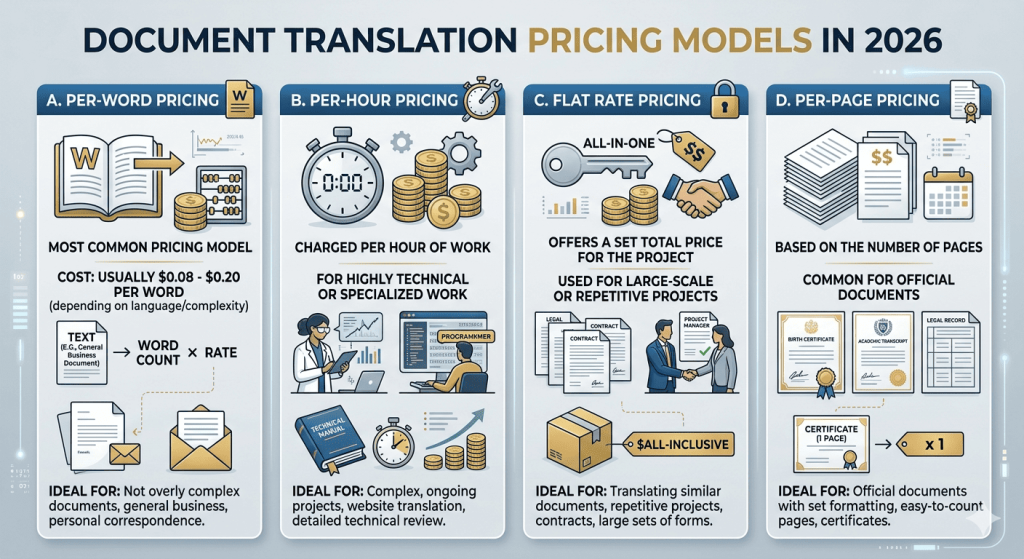
A. Per-Word Pricing
- What It Is: The most common pricing model, where you are charged per word. The cost is usually between $0.08 to $0.20 per word, depending on the language pair and complexity of the document.
- Ideal For: Documents that are not overly technical or highly complex, such as personal correspondence or general business documents.
B. Per-Hour Pricing
- What It Is: For highly technical or specialized translations, some agencies charge per hour. This is common for ongoing projects that require review, such as translating a website or reviewing legal documents.
- Ideal For: Complex or large-scale projects that require continuous translation or specialized knowledge.
C. Flat Rate Pricing
- What It Is: In cases of large-scale translation projects, some agencies offer a flat rate for the entire project. This model is often used for non-technical documents or for repetitive, ongoing projects.
- Ideal For: Projects that require translating similar documents or a set of documents, like a series of contracts or legal forms.
D. Per-Page Pricing
- What It Is: Some agencies charge based on the number of pages in the document. This model is common for official documents like birth certificates, academic transcripts, or legal documents.
- Ideal For: Documents with set formatting that are easy to count by page, such as certificates or official records.
Why This Matters for Your Translation Budget
Knowing how pricing works allows you to make an informed decision when choosing a translation service. By understanding the differences between pricing models, you can compare quotes and choose the one that best fits your project and budget.
4. How to Save on Document Translation Costs
If you want to reduce the cost of translating your documents, consider the following tips:
A. Provide Clear Documents
- The clearer your original document, the easier it is for the translator to work. A document with errors or complex formatting may take longer to translate and cost more.
- Tip: Submit your documents in editable formats such as Word or PDF to avoid extra formatting costs.
B. Avoid Rush Fees
- Rush fees can add a significant amount to your translation cost. Whenever possible, plan ahead and provide ample time for your translator to complete the job without additional charges.
C. Opt for Non-Certified Translations
- If you don’t need a certified translation for legal or official purposes, choosing a non-certified translation can save you money.
D. Bundle Multiple Documents
- Many translation services offer bulk discounts for translating multiple documents at once. If you have several documents to translate, inquire about discounts for bundling them together.
E. Use Translation Memory
- If you have ongoing translation needs, using a translation memory tool can save you money in the long run by storing previously translated content for reuse. While this tool may incur an upfront cost, it reduces the cost of future translations.
Why This Matters for Your Translation Project
By implementing these strategies, you can significantly reduce your translation costs while ensuring that your project is completed with the required accuracy and professionalism.