.webp)

USCIS Certified Translator vs USCIS Approved Translators: What’s the Difference?
Summary
Navigating the immigration process can be challenging, especially when it comes to translating documents for USCIS. One common question is the difference between a USCIS certified translator and a USCIS approved translator.
This guide explains these roles, helping you understand why choosing the right professional matters for your immigration process. Whether you are applying for a green card, visa, or citizenship, using the correct translator can prevent delays, rejections, and unnecessary complications.
What Is a USCIS Certified Translator?
A USCIS certified translator is a professional who provides certified translations of official documents for USCIS submission.
Certification means the translator confirms that the translation is complete and accurate, and provides a signed statement to support this claim.
Key characteristics:
- Accuracy: The translation must fully match the original document
- Certification statement: A signed declaration confirming completeness and accuracy
- Legal expertise: Familiarity with immigration and legal terminology
- Compliance: Meets USCIS requirements for document acceptance
Certified translators ensure that important documents like birth certificates, marriage records, and affidavits are properly translated and legally valid for submission.
Key Takeaway: A USCIS certified translator guarantees both accuracy and compliance.
What Is a USCIS Approved Translator?
The term “USCIS approved translator” is not an official designation defined by USCIS. It generally refers to translators who are experienced and capable of handling immigration-related documents.
Key characteristics:
- Competence: Experience in translating legal or immigration documents
- No formal certification requirement: May not provide certified statements
- General compliance: Familiar with USCIS expectations but not formally verified
Important distinction:
- Certified translators provide signed certification and legal assurance
- Approved translators may be capable but do not offer formal certification
While approved translators may still produce acceptable translations, certified translators offer stronger reliability and legal validity.
Key Takeaway: Certified translators provide an added layer of trust and acceptance.
Why Certified Translations Matter for USCIS
Using a certified translator is the safest approach when submitting documents to USCIS.
Benefits include:
- Legal assurance: Certified translations meet official requirements
- Reduced rejection risk: Proper documentation avoids delays
- Accuracy: Legal terminology is translated correctly
- Complete representation: No details are missed or misinterpreted
Submitting non-certified translations increases the chances of Requests for Evidence or application delays.
Key Takeaway: Certified translations help ensure smooth and timely processing.
How to Choose the Right USCIS Certified Translator
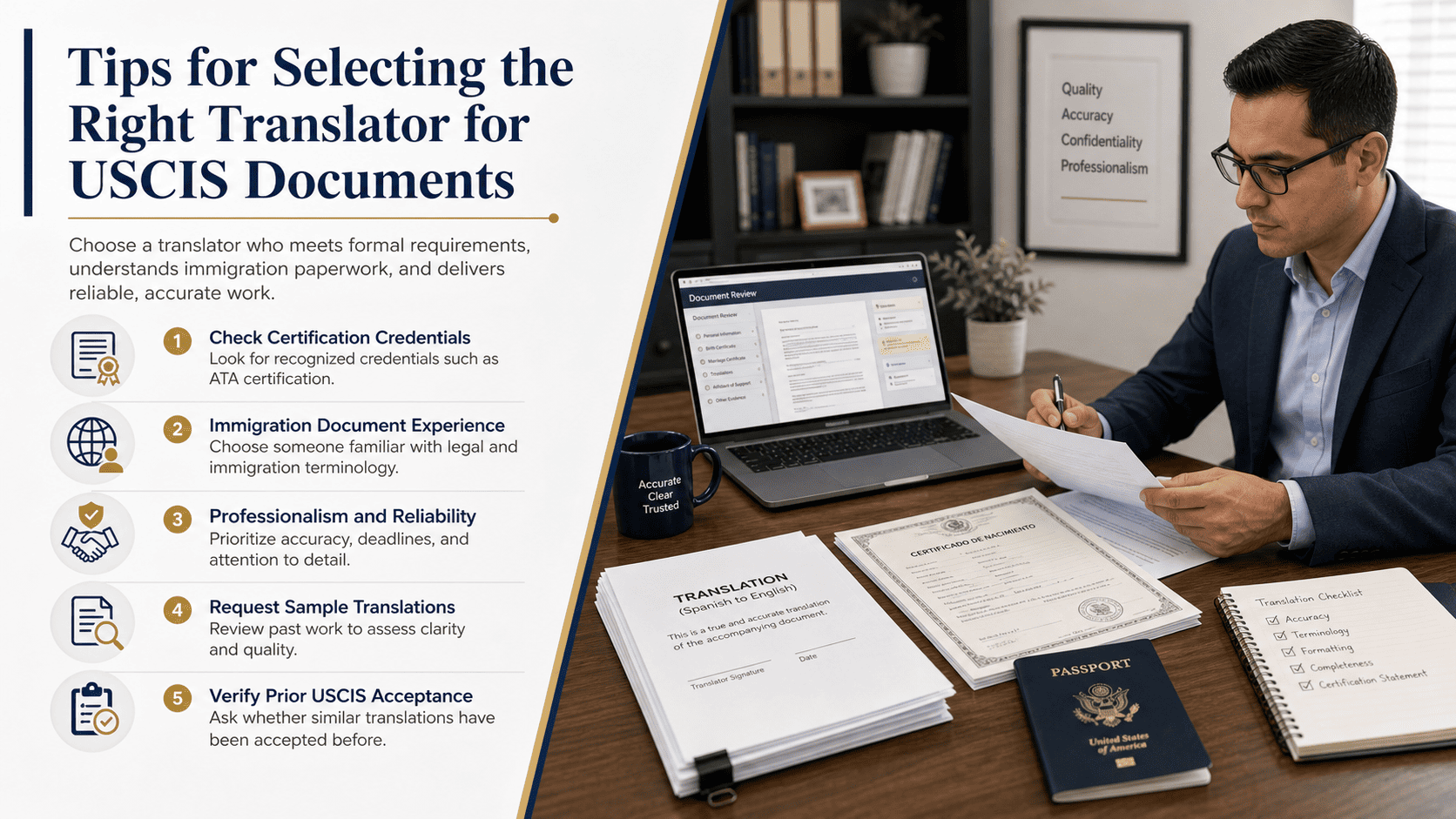
Selecting the right translator is essential for avoiding errors and delays.
Key factors to consider:
- Certification credentials: Look for recognized certifications such as ATA
- Relevant experience: Focus on immigration and legal document expertise
- Professional reliability: Timely delivery and attention to detail
- Sample work: Review past translations for quality
- Proven acceptance: Ensure their work has been accepted by USCIS before
Working with an experienced translator ensures your documents are accurate and submission-ready.
Key Takeaway: The right translator minimizes risk and ensures compliance.
Conclusion
Understanding the difference between a USCIS certified translator and a USCIS approved translator is critical for a smooth immigration process.
While both may offer translation services, certified translators provide the accuracy, certification, and legal assurance required by USCIS. Choosing the right professional can prevent delays, reduce errors, and improve the chances of approval.
At Connected Translations, we provide certified translation services designed to meet USCIS standards. Our experienced translators ensure your documents are accurate, compliant, and ready for submission.
Key Takeaways
- Certified translators provide legally compliant translations
- Certification statements are required for USCIS submissions
- Approved translators are not formally defined by USCIS
- Professional translation services reduce delays and errors