.webp)

Who Can Translate Documents for USCIS? ATA vs Non-ATA Translators

Summary
When submitting documents to USCIS, translation accuracy is critical. USCIS requires foreign-language documents to be translated completely and accurately, along with a signed certification statement confirming the translation’s validity.
This guide explains the difference between ATA certified translators and non-certified translators, the risks of using uncertified services, and how to choose the right translator for immigration-related document submissions.
What Is a USCIS Approved Translator?
A USCIS approved translator is a professional who provides translations that meet USCIS standards for accuracy, completeness, and certification.
USCIS requires all non-English documents to include a certified English translation accompanied by a signed statement from the translator confirming that the translation is accurate and complete.
Certified translators help ensure immigration documents comply with official requirements.
Why certification matters:
- Legal compliance: USCIS requires properly certified translations
- Reduced delays: Accurate translations help prevent Requests for Evidence and rejection
- Professional reliability: Certified translators understand legal and immigration terminology
- Peace of mind: Professional services reduce the risk of translation errors
Key Takeaway: USCIS approved translators help ensure immigration documents meet official submission standards.
Who Are ATA Certified Translators?
The American Translators Association (ATA) is one of the most recognized professional translator organizations in the United States.
ATA certified translators have passed professional exams demonstrating advanced translation skills and subject-matter expertise.
Why ATA certified translators are valuable:
- Rigorous standards: Certified through professional examination and evaluation
- Specialized expertise: Often experienced in legal, medical, and immigration translation
- Professional accountability: Bound by ethical and professional standards
- Higher reliability: Reduced risk of translation mistakes in official documents
Professional translation services using ATA certified translators provide stronger credibility and compliance for USCIS submissions.
Key Takeaway: ATA certified translators offer advanced expertise and higher translation reliability.
Risks of Using Non-Certified Translators
Non-certified translators may offer lower pricing, but they also create significant risks for immigration applications.
Common risks include:
- Inaccurate translations: Errors in names, dates, or legal terminology can delay applications
- Missing certification statements: USCIS may reject documents without proper certification
- Lack of accountability: Non-certified translators are not held to professional standards
- Application delays or rejection: Poor translations may trigger Requests for Evidence
USCIS requires accurate and complete translations for all official submissions, making professional translation quality extremely important.
Key Takeaway: Low-cost uncertified translations can create expensive immigration delays and compliance issues.
How to Choose the Right USCIS Translator
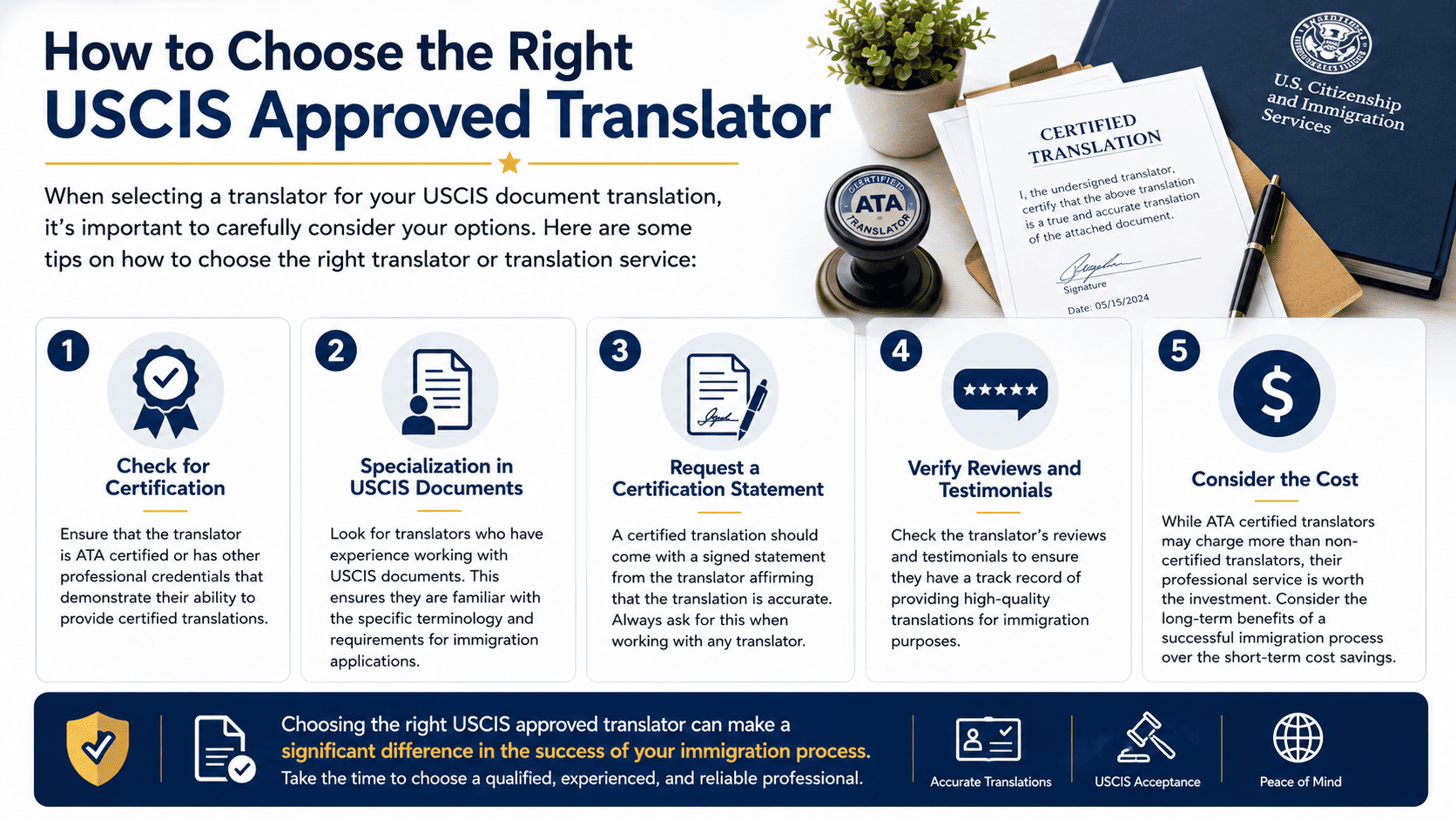
Choosing the right translator is an important part of preparing immigration documents correctly.
1. Verify Certification
Choose translators with ATA certification or other recognized professional credentials.
2. Confirm USCIS Experience
Immigration translation requires familiarity with USCIS terminology and formatting expectations.
3. Request a Certification Statement
Certified translations must include a signed statement confirming accuracy and completeness.
4. Review Testimonials and Reputation
Look for positive client reviews and experience handling immigration documents.
5. Prioritize Quality Over Cost
Professional certified translations may cost more, but they reduce the risk of delays or rejection.
Key Takeaway: Experienced certified translators improve compliance and reduce immigration risks.
Conclusion
Document translation is a critical part of the USCIS immigration process. Accurate, certified translations help ensure that applications are processed smoothly and comply with official standards.
While non-certified translators may appear more affordable, professional ATA certified translators provide stronger accuracy, accountability, and legal reliability for immigration submissions.
At Connected Translations, we provide professional certified translation services designed specifically for USCIS and immigration document requirements.
Key Takeaways
- USCIS requires certified translations for non-English documents
- ATA certified translators provide stronger quality assurance and expertise
- Non-certified translators may increase the risk of delays or rejection
- Certification statements are required for USCIS document acceptance