.webp)

Does USCIS Require Notarized Translations?

Summary
Many immigration applicants assume USCIS requires notarized translations, but that assumption often leads to unnecessary steps and costly mistakes. In reality, USCIS does not require notarization for translated documents. What it does require is certification.
Every non-English document submitted to USCIS must be translated in full and accompanied by a signed certification statement from a qualified translator confirming accuracy and completeness. Confusing notarization with certification is one of the most common reasons applications face delays, Requests for Evidence, or rejection.
This article clarifies the translator rules USCIS follows, explains the difference between notarized and certified translations, and highlights common errors applicants make when submitting translated documents.
The Basics: What Does USCIS Require for Translations?
When submitting documents to USCIS as part of an immigration application, it is crucial to ensure they are accurately translated into English. But here is the big question: does USCIS require notarized translations?
The answer is no. USCIS does not require translations to be notarized. However, translations must meet specific requirements to be accepted.
USCIS requires that:
- Translations are accurate and complete, with no omissions
- Certified translations are provided by a qualified translator
- A certification statement is included and signed by the translator
USCIS does not ask for notarization, but it does require certification. This confirms that the translation is complete, accurate, and legally valid for your application.
Takeaway: Certified translations are essential for USCIS submissions, but notarization is not required.
Notarization vs. Certification: What’s the Difference?
It is easy to confuse notarization with certification, but these two terms serve different purposes.
- Notarized translations: A notary public verifies the identity of the person signing the translation. The notary does not verify translation accuracy.
- Certified translations: A translator or translation service confirms that the translation is accurate and complete through a signed statement.
For USCIS purposes, only certified translations are required. Notarization does not prove translation quality, which is why USCIS focuses on certification instead.
Takeaway: Certification is required for USCIS translations, while notarization is not necessary.
Common Mistakes in Translation Submissions to USCIS
Many immigration applicants make critical mistakes when submitting translations to USCIS, resulting in delayed or rejected applications.
Some of the most common errors include:
- Not using qualified translators: USCIS does not require a specific translator certification, but it does expect the translator to be qualified.
- Omitting the translator’s certification: The translator must provide a signed statement certifying that the translation is accurate and complete.
- Relying on machine translations: Machine translations are not acceptable for USCIS submissions.
- Not formatting translations properly: Translations should follow the original document structure as closely as possible.
For example, if you submit a Spanish birth certificate to USCIS without a signed certification statement, USCIS may issue a Request for Evidence or delay your case.
Takeaway: Always work with qualified translators and submit proper certification to avoid delays.
When to Use USCIS-Approved Translators
Using an USCIS-approved translator helps ensure that your translations are accurate and meet USCIS requirements. While USCIS does not officially certify translators, it expects them to have the skills and experience needed for legal and official documents.
When should you use a certified translator?
- For USCIS applications: Birth certificates, marriage licenses, and other legal documents should be translated and certified.
- When accuracy is crucial: Even minor translation errors can create serious immigration issues.
- For legal or business documents: Official documents often require certified translations for acceptance.
Choosing a qualified translator helps ensure that your documents are translated accurately and meet immigration standards.
Takeaway: Use qualified translators for legal and immigration-related translations to avoid delays.
The Risks of Not Using Certified Translations
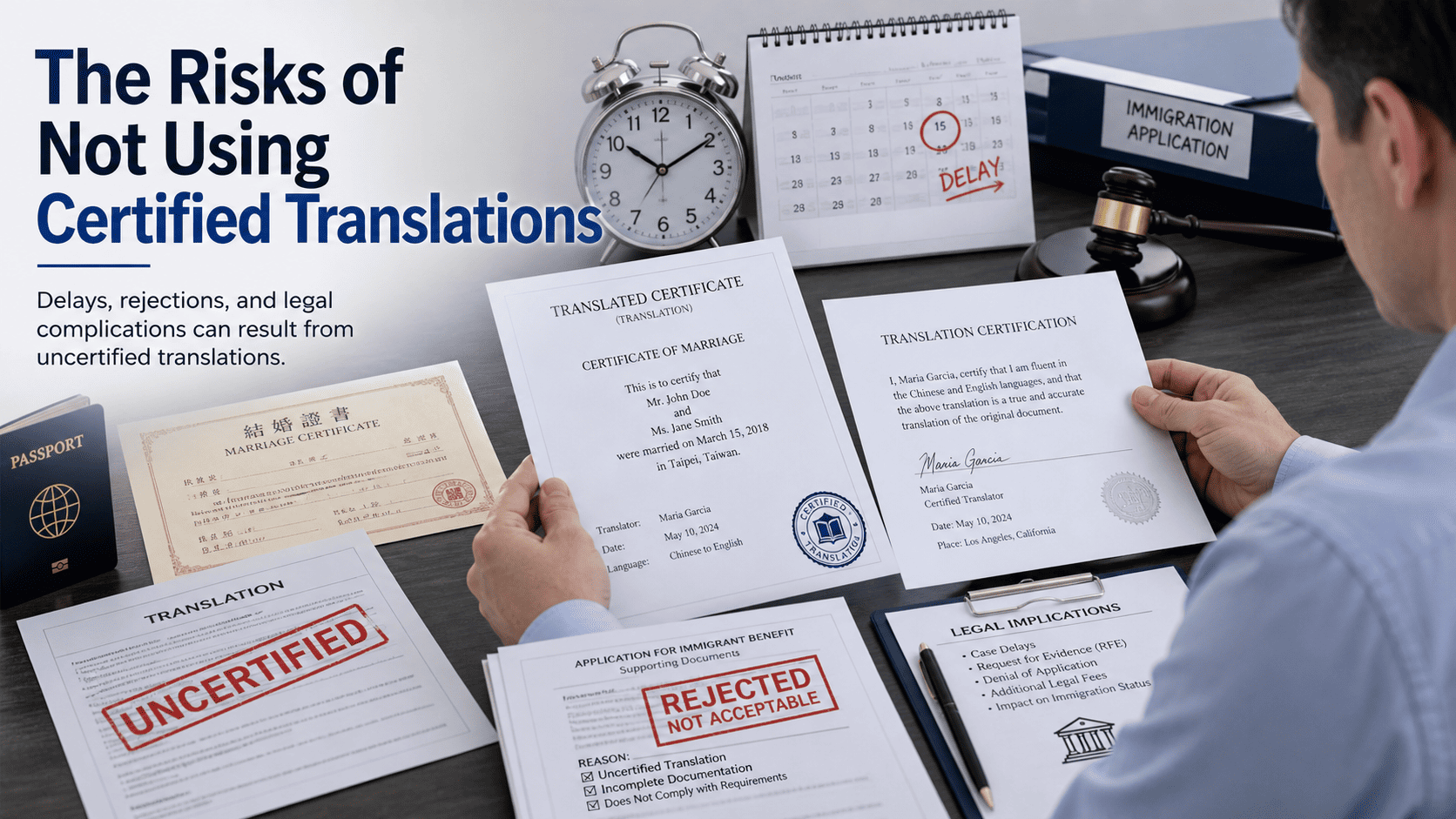
Failing to use certified translators for your USCIS documents can result in serious consequences, including delays or rejection of your application.
Without certified translations, USCIS may deem your documents invalid, causing:
- Delays: USCIS may request additional documentation or corrected certified translations.
- Rejection: In some cases, USCIS may reject an application that does not meet translation requirements.
- Legal complications: Translation mistakes can create misunderstandings in immigration or legal documents.
Example Scenario: Suppose you are applying for a Green Card and submit a translation of your marriage certificate that is not certified. USCIS may reject the document or request a corrected translation, delaying your immigration process.
To avoid these risks, ensure that your translations are completed by qualified professionals and include the required certification statement.
Takeaway: Avoid delays and rejections by ensuring your translations are certified and meet USCIS standards.
Conclusion
USCIS does not require notarized translations, but it does require certified translations. This means the translator must confirm that the translation is complete and accurate through a signed certification statement.
By using qualified translators, you can ensure that your documents are valid and will not cause unnecessary delays or rejections. A professional translation service can help ensure your immigration translations meet USCIS requirements and avoid costly mistakes.
Key Takeaways
- USCIS requires certified translations, not notarized ones
- Notarization verifies identity, not translation accuracy
- Certified translations must include a signed accuracy statement
- Qualified translators help avoid delays, RFEs, and rejections