.webp)

Eastern vs Western Culture: Understanding Key Differences in Values, Communication, and Business Practices
Summary
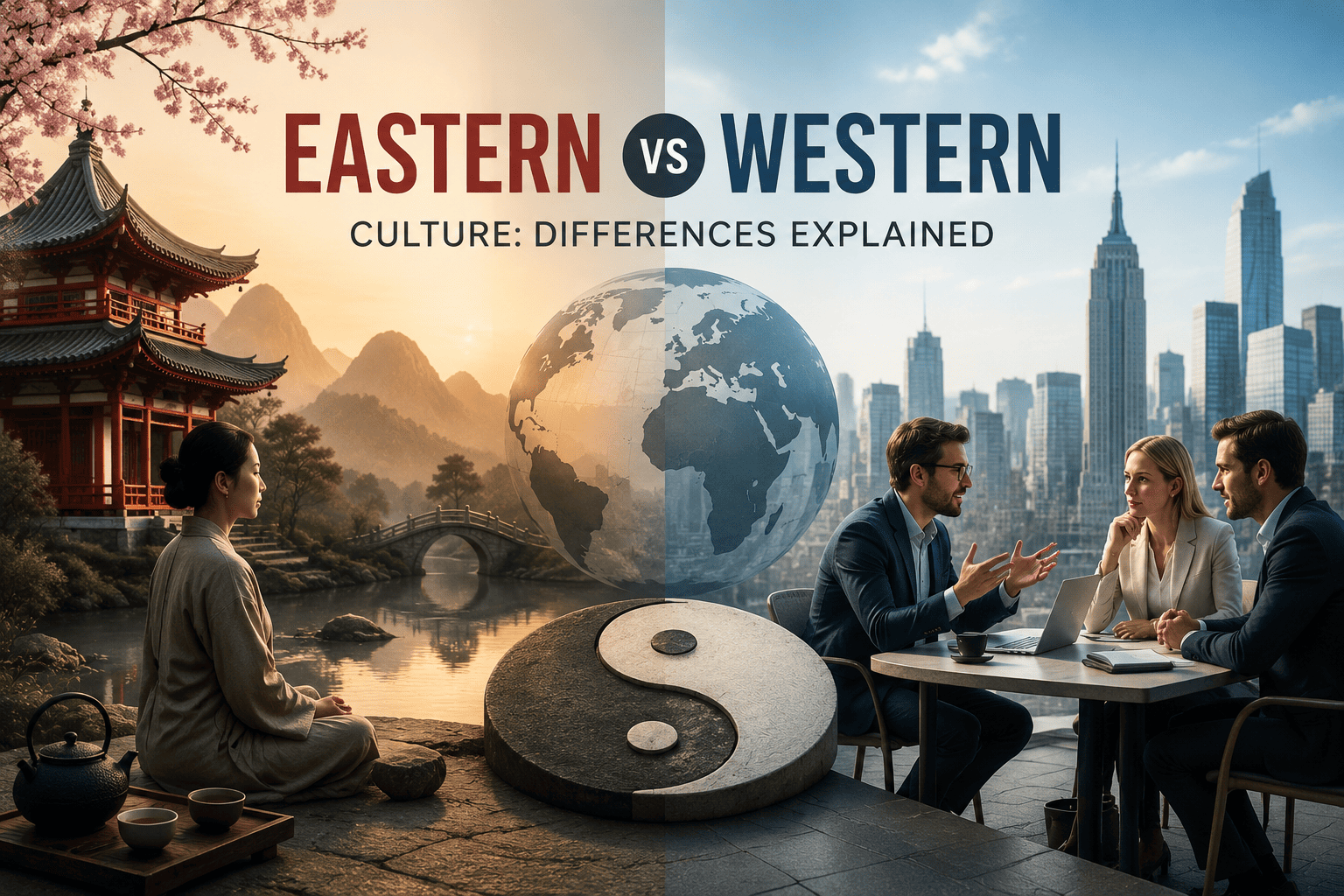
In a world increasingly interconnected by trade, immigration, and technology, understanding the cultural differences between Eastern and Western societies is crucial. These differences impact everything from communication styles to business practices, and misinterpreting them can lead to costly mistakes, especially in international business and legal translation. This post explores the key distinctions between Eastern and Western cultures, offering insights on how these differences affect translation, business, and cross-cultural communication.
Introduction: Why Understanding Eastern vs Western Culture Matters
Imagine trying to negotiate a deal with a Chinese company but missing the cultural nuances that are integral to their business practices. Or, consider submitting an immigration application without accounting for the cultural expectations in communication style—what may seem straightforward to you could be confusing or even offensive to someone from a different cultural background.
For businesses, legal professionals, and individuals working in cross-border contexts, cultural differences between Eastern and Western societies can affect communication, compliance, and the success of international ventures. In this blog, we break down these cultural distinctions and explain why understanding them is crucial when translating documents and engaging in global business.
1. Values: Collectivism vs Individualism
Eastern Culture: Collectivism
Eastern societies, including China, Japan, and India, are primarily collectivist. This means that family, group cohesion, and societal harmony are prioritized over individual desires or achievements. In business and personal life, the needs of the collective—whether it be the family, the company, or the community—take precedence. Respect for authority and hierarchy is also deeply ingrained, influencing how people communicate and work together.
- Key Characteristics:
- Group harmony and cohesion are prioritized.
- Respect for authority and hierarchy is common.
- Family and community values are paramount.
Western Culture: Individualism
In contrast, Western cultures, such as those in the U.S. and parts of Europe, embrace individualism. In these societies, personal autonomy, freedom, and self-reliance are highly valued. People are encouraged to pursue their personal goals and take ownership of their success. This cultural approach fosters innovation and individual responsibility.
- Key Characteristics:
- Personal success and autonomy are highly valued.
- Emphasis on self-reliance and individual achievements.
- Independence is celebrated over collectivism.
Impact on Translation
When translating documents, the cultural value of collectivism or individualism must be taken into account. For example, an Eastern business contract may focus more on obligations to the family or community, while a Western contract may place greater emphasis on personal rights and freedoms. A translator must adapt the tone and content accordingly to ensure the document aligns with the target culture’s values.
2. Lifestyle: Structure vs Flexibility
Eastern Culture: Structure and Tradition
In Eastern cultures, there is a strong adherence to tradition and structure. People tend to follow established routines and social expectations. The work environment is more structured, with longer working hours and a focus on maintaining stability and predictability. Family responsibilities often come before personal ambitions, and there is societal pressure to conform to group expectations.
- Key Characteristics:
- Adherence to tradition and established norms.
- Long working hours and a strong sense of duty.
- Greater social and family responsibility.
Western Culture: Flexibility and Innovation
Western societies, on the other hand, tend to favor flexibility and adaptability. Work-life balance is more important, and there is a greater emphasis on personal freedom, creativity, and innovation. People are encouraged to challenge the status quo and explore new possibilities, often favoring a more dynamic and ever-changing work environment.
- Key Characteristics:
- Emphasis on flexibility, creativity, and innovation.
- Work-life balance is prioritized.
- Personal freedom and self-expression are celebrated.
Impact on Translation
When translating documents, the lifestyle differences between these cultures should be reflected. For example, in a legal document, Eastern translations might focus on long-term stability, hierarchy, and communal well-being, while Western translations might emphasize personal rights, freedom of choice, and flexibility. These differences can also be seen in the tone of employee handbooks, contracts, and business proposals.
3. Communication Styles: Indirect vs Direct
Eastern Culture: Indirect Communication
In many Eastern cultures, communication is often indirect and context-dependent. Direct confrontation or criticism is avoided to maintain harmony and protect the dignity of others. Non-verbal communication, such as body language and tone, plays a key role in conveying meaning. This can sometimes make communication in Eastern cultures seem more subtle and nuanced compared to Western cultures.
- Key Characteristics:
- Indirect and polite communication.
- Use of non-verbal cues and tone of voice.
- Conflict and criticism are avoided in public.
Western Culture: Direct Communication
In contrast, Western cultures tend to favor direct communication. People are expected to be clear and straightforward, even when it involves addressing difficult topics or conflicts. While politeness is still important, there is less concern about avoiding discomfort or confrontation.
- Key Characteristics:
- Direct and transparent communication.
- Open expression of opinions, even in conflict.
- Clarity and honesty are valued.
Impact on Translation
Understanding communication styles is essential for translating content, especially in legal or business contexts. An Eastern audience may find blunt or overly direct language offensive or disrespectful, while a Western audience may appreciate the straightforwardness. Translators need to adapt the tone, phrasing, and even the structure of the text to ensure it resonates with the cultural expectations of the target audience.
4. Business Thinking: Long-Term vs Short-Term Orientation

Eastern Culture: Long-Term Orientation
Eastern cultures tend to have a long-term perspective when it comes to business and personal goals. Building relationships, fostering trust, and working towards sustainable growth are highly valued. Decisions are made with careful consideration of long-term consequences, and patience is often seen as a virtue.
- Key Characteristics:
- Focus on long-term goals and sustainability.
- Building trust and relationships is essential.
- Patience and gradual progress are prioritized.
Western Culture: Short-Term Orientation
In Western cultures, particularly in the U.S., there is often a focus on short-term results. Efficiency, quick decision-making, and immediate returns are more commonly emphasized. Western businesses are more likely to pursue rapid growth and quick profits, sometimes at the expense of long-term stability.
- Key Characteristics:
- Emphasis on quick results and efficiency.
- Short-term profits are prioritized.
- Rapid decision-making and growth.
Impact on Translation
When translating business contracts, marketing materials, or legal documents, it is important to align the content with the target audience’s orientation. A document for an Eastern audience may focus on the long-term benefits of a partnership, while one for a Western audience may highlight immediate gains or short-term successes.
5. Adapting Business Practices Across Cultures
Navigating the differences between Eastern and Western cultures is crucial for international success. Whether you are translating business documents, negotiating contracts, or communicating with international clients, understanding cultural distinctions will help you avoid misunderstandings and foster better relationships.
Key Takeaways:
- Cultural differences influence communication, business practices, and personal interactions.
- Translators must be aware of these differences to ensure that their translations are culturally appropriate and effective.
- Businesses that understand these cultural nuances can enhance their global operations and avoid costly mistakes.
Conclusion
In global business, communication is key. Understanding the differences between Eastern and Western cultures can help businesses succeed internationally and avoid misunderstandings that could lead to legal disputes, compliance issues, or loss of reputation. Whether translating contracts, marketing materials, or internal communications, understanding these cultural nuances is crucial for effective business operations.
At Connected Translations, we specialize in translating documents for both Eastern and Western markets. Our team of experts is well-versed in cultural differences and ensures that your translations are accurate, culturally relevant, and legally compliant.
Contact us today to ensure that your translations are not only linguistically accurate but also culturally tailored to the specific audience.