.webp)

How Translation Errors Can Hurt Brand Trust in International Markets

Summary
Imagine launching a product in a new market only to realize that your marketing slogans offend the local audience. Translation errors are not minor mistakes—they can erode customer trust, damage brand reputation, and even create legal liability. Businesses expanding globally face serious risks if they underestimate the importance of precise, culturally aware translations. This post examines common translation errors, why they happen, and how professional services like Connected Translations safeguard your brand while ensuring accurate, compliant translations.
1. The High Cost of Translation Errors
Translation errors are a serious risk for companies entering international markets. Even small mistakes can escalate into costly issues, from embarrassing marketing campaigns to legal disputes and compliance violations.
Why Translation Errors Happen
- Bad Translators or Unqualified Staff: Not all translators have the technical expertise or cultural knowledge required for professional translations. Using unqualified personnel is a leading cause of errors.
- Rushed Projects: Tight deadlines often result in poor-quality translations, overlooked proofreading, and insufficient review processes.
- Overreliance on Machine Translation: AI tools can be helpful for simple content, but they often misinterpret idioms, jargon, or industry-specific language, leading to errors humans would catch.
Real-World Examples
- In 2017, Pepsi launched a slogan in China that translated roughly to “Pepsi brings your ancestors back from the dead,” creating public outrage and embarrassment.
- General Motors’ Chevy Nova struggled in Spanish-speaking markets in the 1990s because “Nova” translates to “No go,” negatively affecting sales.
Impact on Businesses
- Customer Trust: Even minor translation errors can make a brand appear careless, reducing consumer confidence.
- Revenue Loss: Misunderstandings in product instructions, marketing content, or contracts can result in returns, complaints, and failed launches.
- Legal Liability: Poor translations of contracts, regulatory documents, or compliance materials can expose a company to lawsuits or penalties.
Professional translation agencies like Connected Translations employ certified linguists to guarantee that every translation is accurate, culturally appropriate, and compliant with industry standards. This reduces risks and protects your global brand reputation.
Supporting Evidence
A study by Common Sense Advisory found that 72% of consumers spend most or all of their time on websites in their native language, and 56% say obtaining information in their language is more important than price. This underscores how precise translations directly impact brand perception and customer engagement.
2. Common Translation Errors and How They Happen
To avoid costly mistakes, businesses need to understand the most frequent translation errors and their causes.
Categories of Translation Errors
- Literal Translations: Translating word-for-word without considering context or idiomatic meaning often leads to confusion or offense.
- Cultural Missteps: Ignoring local customs, humor, or sensitivities can produce content that alienates or offends the audience.
- Technical Errors: Misinterpreting industry-specific terminology—legal, medical, financial—can have serious consequences.
- Formatting and Consistency Issues: Mistakes in dates, numbers, or measurement units can create confusion and potential compliance issues.
Examples of Bad Translation Outcomes
- Mislabeling pharmaceutical instructions, risking patient safety.
- Misinterpreting contract clauses, leading to disputes in international jurisdictions.
- Marketing campaigns using idioms or humor that do not exist in the target language, causing embarrassment or confusion.
Quality Standards to Follow
- Proofreading: Ensures translations are grammatically and contextually accurate.
- Back-Translation: Confirms that translated content matches the original intent.
- Domain Expert Review: Native speakers with industry knowledge verify technical accuracy.
Connected Translations provides all of these safeguards, reducing risk and ensuring high-quality translations that maintain your brand integrity.
3. Real-World Scenario: The Domino Effect of a Translation Fail
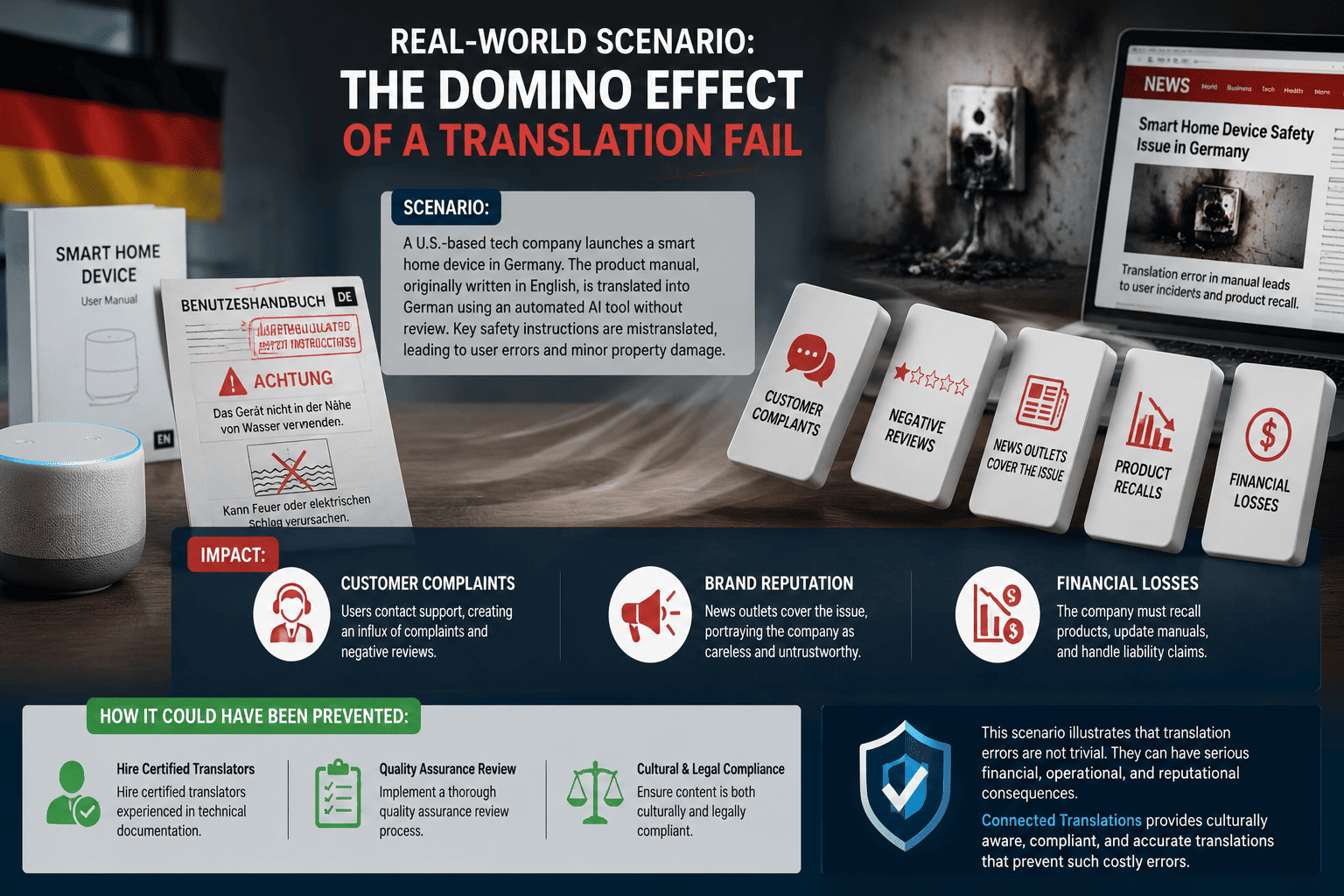
Translation errors can have far-reaching consequences beyond simple embarrassment. Consider the following scenario:
Scenario
A U.S.-based tech company launches a smart home device in Germany. The product manual, originally written in English, is translated into German using an automated AI tool without review. Key safety instructions are mistranslated, leading to user errors and minor property damage.
Impact
- Customer Complaints: Users contact support, creating an influx of complaints and negative reviews.
- Brand Reputation: News outlets cover the issue, portraying the company as careless and untrustworthy.
- Financial Losses: The company must recall products, update manuals, and handle liability claims.
Prevention
- Hiring certified translators experienced in technical documentation.
- Implementing a thorough quality assurance review process.
- Ensuring content is both culturally and legally compliant.
This scenario illustrates that translation errors are not trivial. They can have serious financial, operational, and reputational consequences. Connected Translations provides culturally aware, compliant, and accurate translations that prevent such costly errors.
4. Best Practices to Avoid Translation Errors
Maintaining brand trust in international markets requires adopting best practices for translation:
- Use Certified Translators: Always engage professionals who are certified and have experience in your specific industry.
- Implement Quality Control: Include proofreading, back-translation, and peer review to ensure accuracy.
- Localize Content: Adapt marketing, product manuals, and legal documents to reflect local culture and language nuances.
- Audit Translation Providers: Verify translator credentials, confidentiality protocols, and compliance with regulatory standards.
- Avoid Overreliance on AI: AI can assist with simple translations, but it should not replace human expertise.
Scenario Example
A U.S. healthcare provider expanded into Latin America. Partnering with Connected Translations ensured that patient forms, medical instructions, and marketing materials were accurate and culturally appropriate. This prevented costly errors, built trust with local patients, and ensured compliance with local regulations.
By following these best practices, companies reduce the risk of translation errors and protect their global brand trust.