.webp)

Translation Services Company vs Freelance Translator
Summary
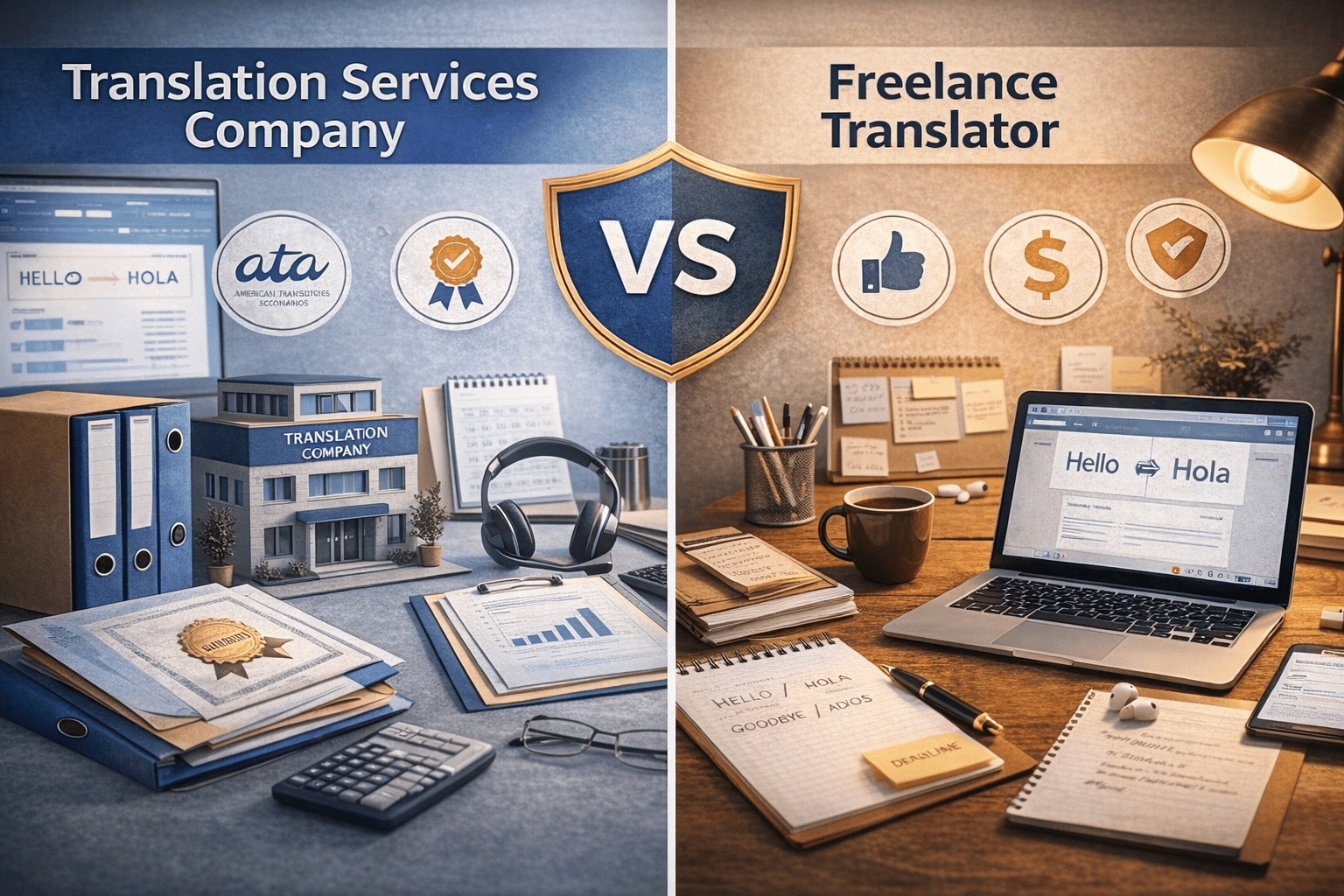
When it comes to document translation, choosing between a translation services company and a freelance translator can be a challenge. In this blog, we explore the pros and cons of each option, helping you make an informed decision for your translation needs. Whether you’re handling official documents, legal translations, or personal communication, this post will guide you toward the best choice.
Translation Services Company vs Freelance Translator: What’s Best for You?
As the demand for high-quality translation services grows, businesses and individuals are faced with an important decision: Should you rely on a translation services company or hire a freelance translator for your project? This is not just about finding someone who speaks the language, but about ensuring that your translations are accurate, professional, and tailored to your specific needs.
For many, the idea of working with a freelance translator may sound appealing due to the potential cost savings. However, a translation services company often brings a variety of advantages that can outweigh the initial price difference. Let’s explore the pros and cons of both options so you can make a more informed decision.
1. What is a Translation Services Company?
A translation services company is a professional agency that offers a wide range of language services, including document translation, interpretation, and transcription. These companies typically have a team of translators specializing in different languages, industries, and document types. Many translation companies also have certified translators who are qualified to handle official, legal, and highly technical translations.
Pros of Working with a Translation Services Company:
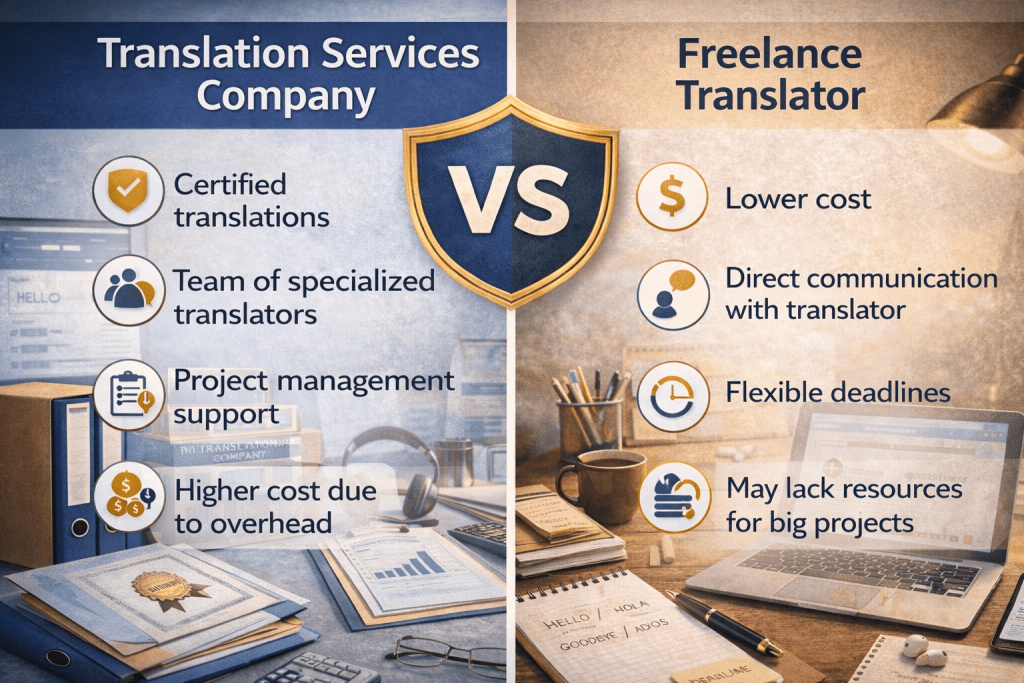
- Consistency and Quality Assurance: Translation services companies often have strict quality control processes in place. These include proofreading, editing, and multiple rounds of checks to ensure accuracy.
- Specialized Expertise: Most companies employ a team of translators with different areas of expertise. This allows you to choose a translator with specific knowledge of the subject matter, whether it’s legal, medical, technical, or business-related.
- Certified Translations: Many translation companies can provide certified translations for official purposes, such as for USCIS or legal proceedings. This ensures the translation meets the standards required by governmental and legal bodies.
- Project Management Support: Translation services companies offer project management support, ensuring that your project is completed on time and within your specifications. This is especially useful for larger or more complex translation projects.
- Scalability: If you need to translate a large volume of documents, a translation services company has the infrastructure to handle bulk orders and can offer quicker turnaround times than freelancers.
Cons of Working with a Translation Services Company:
- Higher Cost: One of the main drawbacks is the cost. Due to overhead, project management, and the need to pay multiple professionals, the rates charged by translation companies can be higher than those of freelance translators.
- Less Personalized Attention: With a translation services company, you may have less direct interaction with the translator. Communication is often channeled through project managers, which can create a more impersonal experience.
2. What is a Freelance Translator?
A freelance translator is an individual who works independently, offering translation services to clients on a contract or per-project basis. Freelancers can be found on various platforms or through word-of-mouth referrals, and they may specialize in one or more language pairs.
Pros of Hiring a Freelance Translator:
- Cost-Effective: Freelance translators typically have lower overhead costs, which can result in lower rates for clients.
- Personalized Service: When you hire a freelancer, you are likely to work directly with the translator, which can create a more personalized experience. Freelancers can often tailor their approach to your specific needs and preferences.
- Flexibility: Freelance translators often offer more flexibility in terms of deadlines and availability. If you need a quick turnaround, freelancers may be able to accommodate last-minute requests more easily.
Cons of Hiring a Freelance Translator:
- Limited Resources: Freelancers may not have the resources to handle large-scale projects or provide quick turnarounds for bulk translation. If you have a large document or a tight deadline, a freelancer may struggle to meet your needs.
- Inconsistent Quality: While many freelance translators are highly skilled, the quality can vary from one freelancer to another. Unlike a translation company, which has standardized processes in place, the quality assurance process may be less rigorous with a freelancer.
- Lack of Specialization: Freelancers often work across various fields but may not have the deep expertise required for highly specialized content, such as legal, medical, or technical translations.
3. Which Option is Best for Your Needs?
Choosing between a translation services company and a freelance translator depends on several factors, including the nature of the project, your budget, and your timeline. Here’s a quick comparison to help you decide:
When to Choose a Translation Services Company:
- You need certified translations for official documents, such as legal contracts, medical reports, or government applications.
- Your project requires specialized knowledge in a specific industry, like healthcare, law, or technology.
- You have a large volume of documents that need translation within a short time-frame.
- You require ongoing support and project management to ensure consistent quality and deadlines.
When to Choose a Freelance Translator:
- You are working with a small project or a limited budget and don’t need official certification.
- You prefer to have direct contact with the translator and a more personalized approach.
- You need a quick turnaround and a freelancer is available to meet the deadline.
4. The Importance of Certified Translations
For certain situations, especially when dealing with immigration (like USCIS applications) or legal matters, it’s crucial to have certified translations. Certified translators provide an official statement that the translation is accurate and complete to the best of their knowledge. These translations are often required by governmental bodies, courts, and other institutions.
When hiring a translator for certified translations, always ensure that they are qualified and accredited by recognized bodies, such as the American Translators Association (ATA) or other relevant professional organizations.
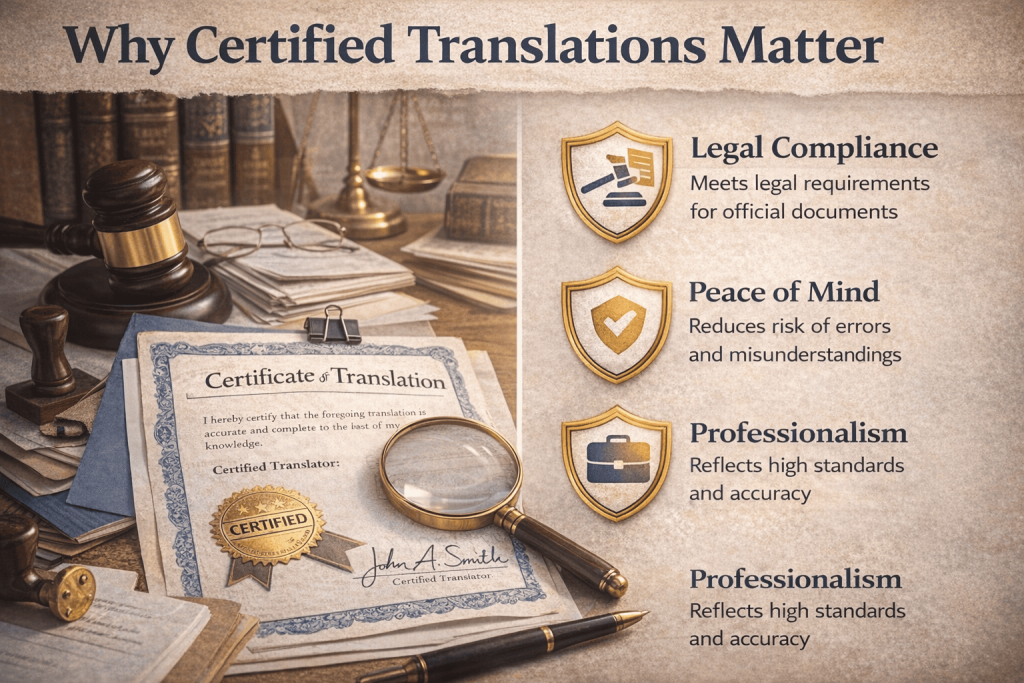
Why Certified Translations Matter:
- Legal Compliance: Certified translations meet the legal requirements for official documents, preventing delays or rejections in legal proceedings.
- Peace of Mind: Knowing that your documents are accurately translated by a certified professional can reduce the risk of errors or misunderstandings.
- Professionalism: Certified translations reflect a high standard of professionalism and accuracy, which is essential for any official or legal context.
Conclusion
In the debate between choosing a translation services company and a freelance translator, both options have their merits. If you need specialized expertise, scalability, and certified translations, a translation services company might be the right fit for you. However, if you are looking for a more personal approach or working with a limited budget, a freelance translator could be a viable option.
At Connected Translations, we understand the importance of high-quality, certified translations for all types of projects, from legal to business needs. Our team of experts is ready to assist with any translation requirements you may have.
Key Takeaways:
- Translation services companies offer more resources, consistency, and specialization.
- Freelance translators can offer a more personalized, flexible, and cost-effective option.
- Certified translations are necessary for legal, immigration, and official documents.
- Choose the right option based on your project’s scale, complexity, and timeline.