.webp)

Spanish vs Mexican: Exploring Language, Heritage, and Identity
Summary
While “Spanish” and “Mexican” might seem like interchangeable terms, the cultural, linguistic, and social differences are significant. Both nations share the same language but exhibit unique practices, histories, and values. In this blog, we explore the contrasts between Spanish and Mexican languages, cultures, and identities, and how these differences influence communication, business, and social interactions.
1. The Language: Spanish vs. Mexican Spanish
At first glance, it might seem that the only difference between Spanish and Mexican Spanish is the name. However, both forms of the language—while originating from the same base, Castilian Spanish—have distinct differences in pronunciation, vocabulary, and grammar. Understanding these variations is essential for effective communication, especially in business or travel situations.
A. Spanish (Castilian)
- Origin: Castilian Spanish originated in Spain and is the official language of Spain, as well as many countries in Latin America.
- Pronunciation: One of the most noticeable differences is the pronunciation of the letters “z” and “c” when they precede the letters “e” or “i”. In Castilian Spanish, these letters are pronounced with a “th” sound, as in “think”.
- Vocabulary: While both Spain and Mexico share much of the same vocabulary, there are some key differences. For instance, the word for car in Spain is “coche,” while in many Latin American countries, it is referred to as “carro.”
B. Mexican Spanish
- Pronunciation: Mexican Spanish tends to have a softer pronunciation compared to Castilian. For example, the “z” and “c” sounds before “e” or “i” are pronounced like an “s” in Mexico.
- Vocabulary: Mexican Spanish is rich with indigenous words that have been incorporated into everyday speech. Words like “tomate” (tomato) and “chocolate” come from the Nahuatl and Mayan languages, respectively, and are common in Mexican Spanish.
Why It Matters for Business
Understanding the differences between Spanish and Mexican Spanish can significantly impact business dealings. If you’re marketing a product in Spain versus Mexico, using the correct terms and pronunciations will foster better communication and prevent misunderstandings. By adapting your language to the regional preferences, you can establish stronger rapport with local clients, customers, and business partners.
2. Cultural Heritage: Spanish vs. Mexican Values
Language may be the most apparent difference, but the cultural values and traditions between Spain and Mexico are also distinct. Both countries share certain common elements, such as Catholicism, but their customs and everyday practices differ greatly. Let’s dive into the key cultural aspects of both nations.
A. Spanish Culture
- Social Structure: Spanish society is typically hierarchical, placing strong importance on family values, particularly respect for elders. However, individualism is more prominent than in Mexican culture, with a focus on personal achievements.
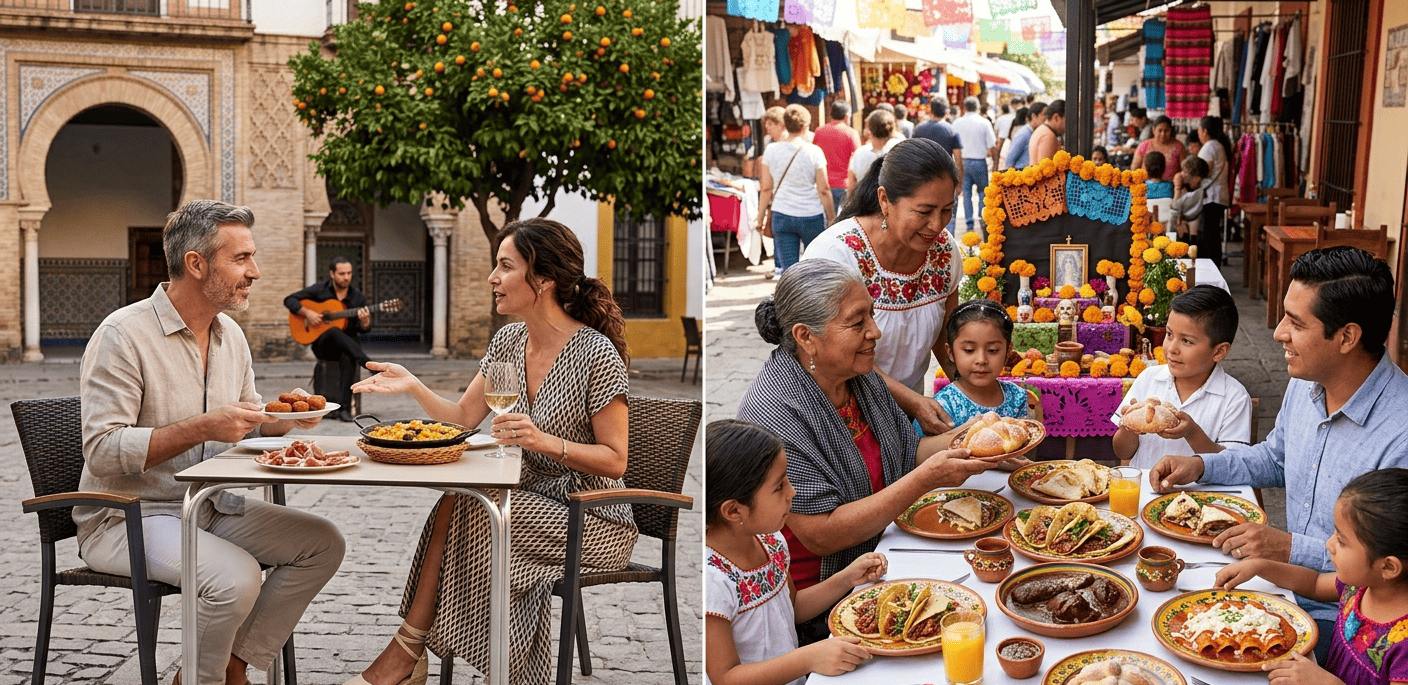
- Cuisine: Spanish cuisine is diverse and well-known worldwide. Paella, tapas, and jamón ibérico are some of Spain’s iconic dishes. Meals in Spain are communal, but portion sizes tend to be smaller, encouraging sharing and social interaction.
- Pride in History: Spain has a deep pride in its history, particularly from the Spanish Empire. The country’s cultural identity is tied to its historical accomplishments in art, architecture, and exploration. Flamenco dancing and bullfighting are symbolic of Spanish heritage.
B. Mexican Culture
- Social Structure: In Mexico, the concept of familia (family) is deeply ingrained. Family is central to Mexican identity, with strong bonds between extended family members. Most extended families live in close proximity, and meals are often seen as opportunities to connect and engage.
- Cuisine: Mexican cuisine is a vibrant fusion of Mesoamerican and Spanish influences, with tacos, enchiladas, tamales, and mole as staples. Mexican food is rich in flavor and heavily influenced by local, indigenous ingredients.
- Pride in Heritage: Mexicans are incredibly proud of their cultural heritage, which blends indigenous and Spanish influences. Celebrations like Día de los Muertos (Day of the Dead), Cinco de Mayo, and Las Posadas are essential to Mexican culture and symbolize the country’s deep connection to family, faith, and tradition.
Why It Matters for Communication
In a business context, understanding the cultural differences in values and traditions is crucial. In Mexico, relationships and trust are often built during long meals, while in Spain, business meetings may begin with more formal introductions and discussions of individual achievements. Understanding these distinctions can improve cross-cultural communication and help businesses develop stronger international partnerships.
3. Social Norms and Etiquette: Their Impact on Behavior
Even within Spanish-speaking countries, the way people interact with each other can vary greatly. Social norms and etiquette play an important role in shaping behavior and communication, particularly in professional settings.
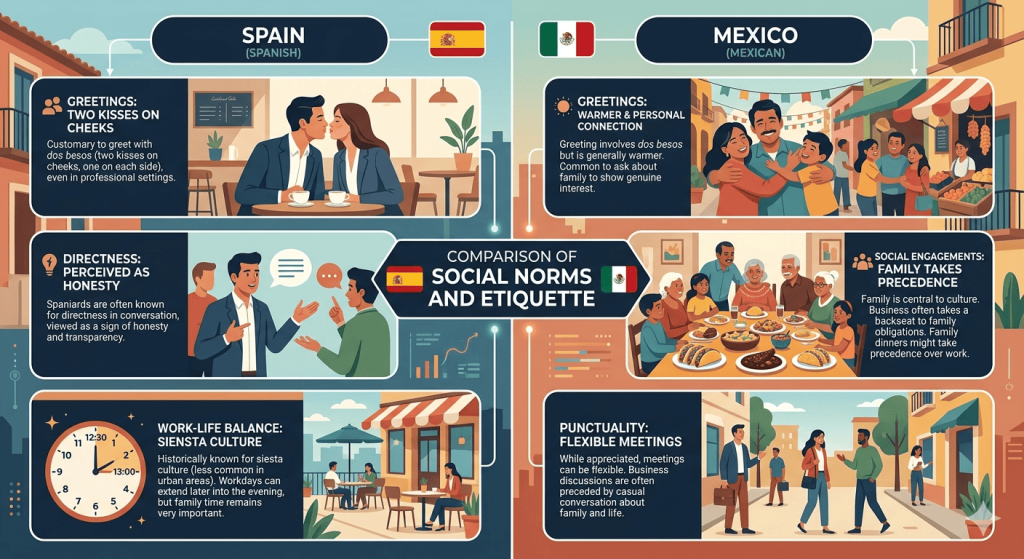
Spanish Social Norms and Etiquette
- Greetings: In Spain, it’s customary to greet with two kisses on the cheeks (one on each side), even in professional settings.
- Directness: Spaniards are often known for their directness in conversation, which can sometimes be perceived as blunt. However, this is viewed as a sign of honesty and transparency in Spain.
- Work-Life Balance: Historically, Spain has been known for its siesta culture, although it is less common in urban areas. Workdays may extend later into the evening, but family time remains important.
Mexican Social Norms and Etiquette
- Greetings: Like Spain, Mexicans also greet with two kisses on the cheeks, but the greeting tends to be warmer and involves more personal connection. It’s common to ask about someone’s family, which shows genuine interest and respect.
- Work-Life Balance: Family is central to Mexican culture, and business often takes a backseat to family obligations. Social engagements, such as family dinners, might take precedence over work.
- Punctuality: While punctuality is appreciated, meetings in Mexico can be more flexible. Business discussions are often preceded by casual conversations about family and life.
Why Understanding Social Norms and Etiquette Matters for Businesses
Respecting social norms and etiquette can make a huge difference in the success of business interactions. In Mexico, focusing on building a personal connection can create more trust, whereas in Spain, efficiency and directness may be valued. Recognizing these differences can prevent misunderstandings and help foster stronger relationships.
4. Spanish vs Mexican: Identity and Global Perception
Both Spain and Mexico have unique national identities influenced by their respective histories. While the two countries share some cultural elements due to their shared past, their identities diverge in meaningful ways.
Spanish Identity
- Cultural Pride: The Spanish take immense pride in their historical achievements, especially their past as a colonial empire. Spain’s cultural contributions to art, literature, and architecture are foundational to its identity.
- Modern Spain: Today, Spain is a modern European country, but its historical roots continue to shape the nation’s identity and global perception. Spain is known for its art and fashion, and cities like Barcelona and Madrid are global hubs for creativity and innovation.
Mexican Identity
- Indigenous and Colonial Roots: Mexico’s identity is a fusion of indigenous heritage and Spanish colonialism. This blend results in a rich cultural identity that is reflected in the country’s food, festivals, and language.
- National Pride: Mexicans celebrate their heritage with pride, particularly through holidays like Día de la Independencia (Independence Day) and Día de los Muertos (Day of the Dead). These celebrations honor Mexico’s indigenous roots and its history as a nation.
Why It Matters for Communication
Understanding how national identity shapes perceptions of Spain and Mexico can enhance communication and business relationships. When communicating with Spanish or Mexican individuals, it’s important to be aware of their cultural pride and history, as this can influence their responses and attitudes toward certain issues.