.webp)

What Country Has The Oldest Language in The World? Discovering Ancient Linguistic Roots
Summary
Which country can claim to have the oldest language in the world? Is it a language still spoken today, or does it exist only in ancient texts? In this blog, we explore the oldest languages known to humanity, from the first written texts to the spoken tongues that formed the foundation of modern languages. Read on to uncover the linguistic history that shaped communication as we know it.
What Is the Oldest Language in the World?
When we think of the oldest language in the world, we’re likely to imagine ancient civilizations like Mesopotamia or Egypt. But the truth is, the title of the oldest language is not easy to claim. The concept of “oldest” can refer to either the oldest written language or the oldest spoken language, both of which have different criteria and timelines.
Ancient Written Languages: The earliest known written languages date back thousands of years. Some of the oldest written languages include:
Sumerian: The Sumerians, in ancient Mesopotamia, are credited with creating one of the earliest known writing systems, cuneiform, around 3200 BCE. This language is often considered one of the oldest written languages.
Egyptian Hieroglyphs: Ancient Egyptian hieroglyphs have been traced back to around 3300 BCE. These symbolic writings were used to record the language spoken by ancient Egyptians and hold great historical significance.
Akkadian: As the first Semitic language known to have been written down, Akkadian was spoken in ancient Mesopotamia and is considered one of the world’s oldest written languages.
While these languages are no longer spoken in their original forms, their written forms have survived in historical records, giving us a window into ancient cultures.
Ancient Spoken Languages: When we consider spoken languages, the answer becomes a bit more complicated. Many spoken languages predate written forms and were passed down orally before they were ever recorded. These languages include:
Tamil: The Tamil language, spoken primarily in southern India and Sri Lanka, is often considered the oldest continuously spoken language still in use today. Its origins go back over 2,000 years, with early written records from around 500 BCE.
Chinese: The Chinese language has ancient roots, with written records dating back to around 1200 BCE, but the spoken form of the language evolved over millennia. Modern Mandarin is the result of centuries of linguistic development from these ancient forms.
Why This Matters?
Understanding the origins of languages helps us appreciate how much history and culture are embedded in the way we communicate today. Language is more than just a tool, it is a bridge that connects us to ancient civilizations, philosophies, and traditions. Knowing where languages began can enrich our understanding of their evolution and significance in modern global business, education, and diplomacy.
The Oldest Written Languages and Their Influence Written language not only marks the passage of time but also serves as a powerful tool for preserving culture. The earliest written languages were used to record laws, history, and religious texts, and these writings continue to influence modern languages and cultures.
Let’s explore the significance of some of these ancient languages:
Sumerian: Sumerian is widely regarded as the oldest known written language, dating back to around 3200 BCE. The Sumerians of ancient Mesopotamia used cuneiform script, which is one of the earliest systems of writing. This language was pivotal in documenting early history, commerce, and laws, providing insight into one of the first urban civilizations.
Egyptian Hieroglyphs: Ancient Egyptian hieroglyphs have been traced back to around 3300 BCE. These symbolic writings were used to record the language spoken by ancient Egyptians and hold great historical significance.
Akkadian: As the first Semitic language known to have been written down, Akkadian was spoken in ancient Mesopotamia and is considered one of the world’s oldest written languages. The Akkadian script is among the earliest known alphabets and influenced later writing systems, including Phoenician and Hebrew.
Why Understanding Ancient Written Languages Matters
Ancient written languages preserve knowledge about ancient cultures. The law codes, writings and belief systems of ancient societies are preserved in the written records which they left behind. Ancient written languages preserve information about the evolution of language. Written languages have evolved to meet the needs of each successive culture which has possessed them.
The Oldest Spoken Languages Still Spoken Today Written languages can preserve information about history, but spoken languages are the living heritage of ancient cultures.
These are a few examples of the oldest languages which are still spoken today:

Tamil: Spoken by millions in India and Sri Lanka, Tamil boasts a history spanning over 2,000 years.
Chinese: Although the modern Mandarin Chinese spoken today has evolved significantly from ancient Chinese, its roots stretch back to over 3,000 years ago
Why Understanding Ancient Spoken Languages Matters: Ancient spoken languages preserve cultural identity. Tamil and Chinese are important parts of the identity of millions of people around the world. Understanding ancient spoken languages preserves knowledge which is important to international business. Whether your company is operating in Asia, the Middle East, or elsewhere, understanding the ancient languages which are still spoken there today can provide you with valuable insights into emerging markets and economies.
How Translation Services Help Preserve Ancient Languages Translation services play a role in the preservation of ancient languages, whether it is in the translation of ancient texts, or in ensuring that modern speakers of ancient languages understand their cultural heritage.
Translating Ancient Languages to Preserve Cultural Heritage
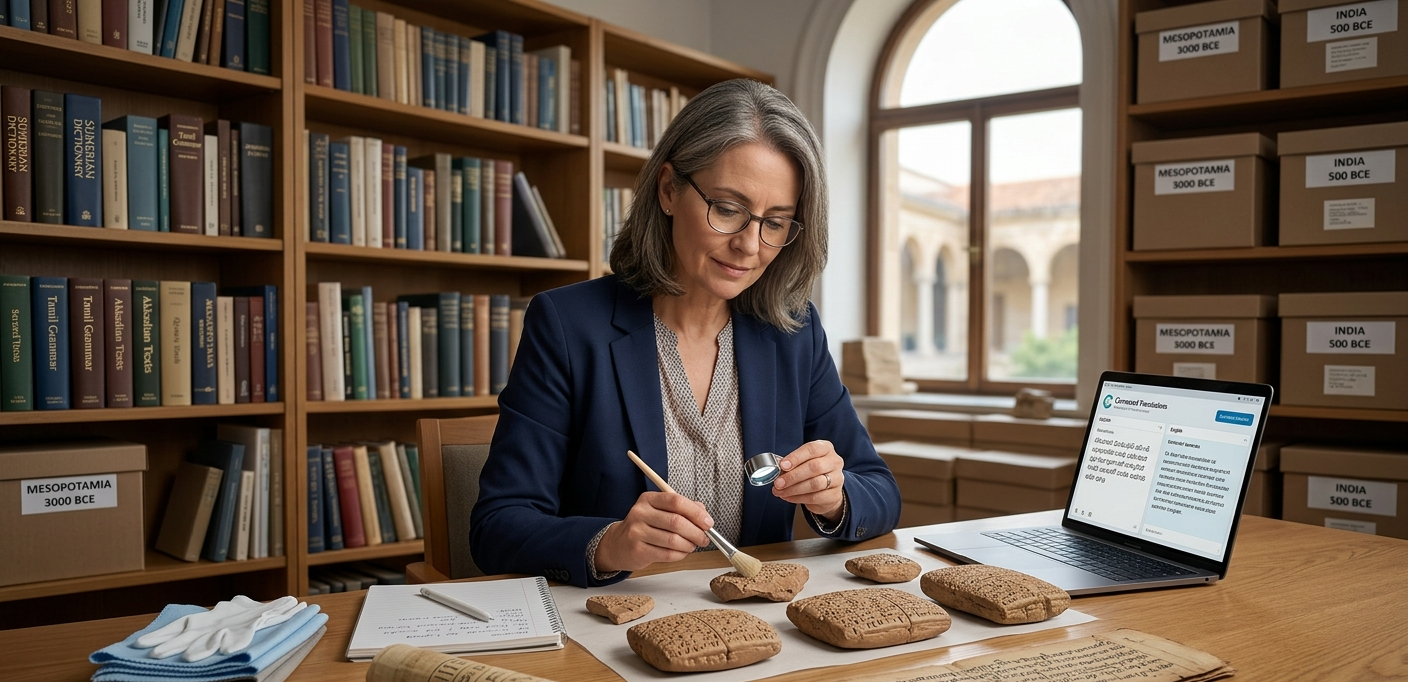
Translation services can help you understand ancient texts. From Sumerian tablets to Egyptian hieroglyphs, translation services can unlock the secrets of ancient cultures.
Translation services can help you revive a dead language. Even once a language has fallen out of common use, if there are written records of it, translation services can help you unlock the cultural knowledge which it preserves.
At Connected Translations we offer professional translation services for ancient texts, to help you unlock the cultural heritage of ancient languages. Our team of expert linguists ensure that every translation is accurate, and culturally sensitive.